

Yellow mealworms are gaining significant attention across the country as a high quality protein source for livestock. As mealworm farming in Kenya becomes a rising trend, poultry keepers are discovering that these insects offer a reliable, local solution to fill gaps in the feed bucket. When added as part of a balanced ration, the yellow mealworms Kenya farmers use can support faster growth, improved egg laying, and stronger overall bird nutrition.
This is especially important for those raising Kienyeji chicken, where feed costs often dictate the profitability of the flock. By incorporating this sustainable chicken feed into their daily routine, farmers can improve bird health without relying solely on expensive commercial inputs. Because mealworms can be produced locally using simple setups, they serve as a practical way to supplement traditional diets rather than replacing them entirely.
How To Breed Mealworms! Mealworm Farming 101
Key Takeaways
- High-Quality Protein: Yellow mealworms (Tenebrio molitor) are an excellent, locally produced protein supplement that supports faster poultry growth, improved feather health, and consistent egg production.
- Cost-Efficiency: Integrating mealworms into a poultry diet helps farmers reduce dependence on expensive, imported commercial feeds, making small-scale poultry farming more sustainable and profitable.
- Circular Farming: Mealworms allow farmers to transform organic farm by-products and waste into high-value animal feed, minimizing environmental impact and supporting a circular economy.
- Simple Management: They are ideal for smallholder farms in Kenya because they require minimal space, low-tech equipment, and straightforward maintenance routines, provided the environment remains dry and clean.
What yellow mealworms are and why farmers trust them
Yellow mealworms, scientifically known as Tenebrio molitor, are the larval stage of the darkling beetle. They are not ordinary worms, and it is important to distinguish them from composting worms like red wigglers, which are primarily used for soil health rather than high-protein livestock nutrition. Farmers specifically value the larval stage because it is this phase that packs the most usable protein and fat for poultry feed.
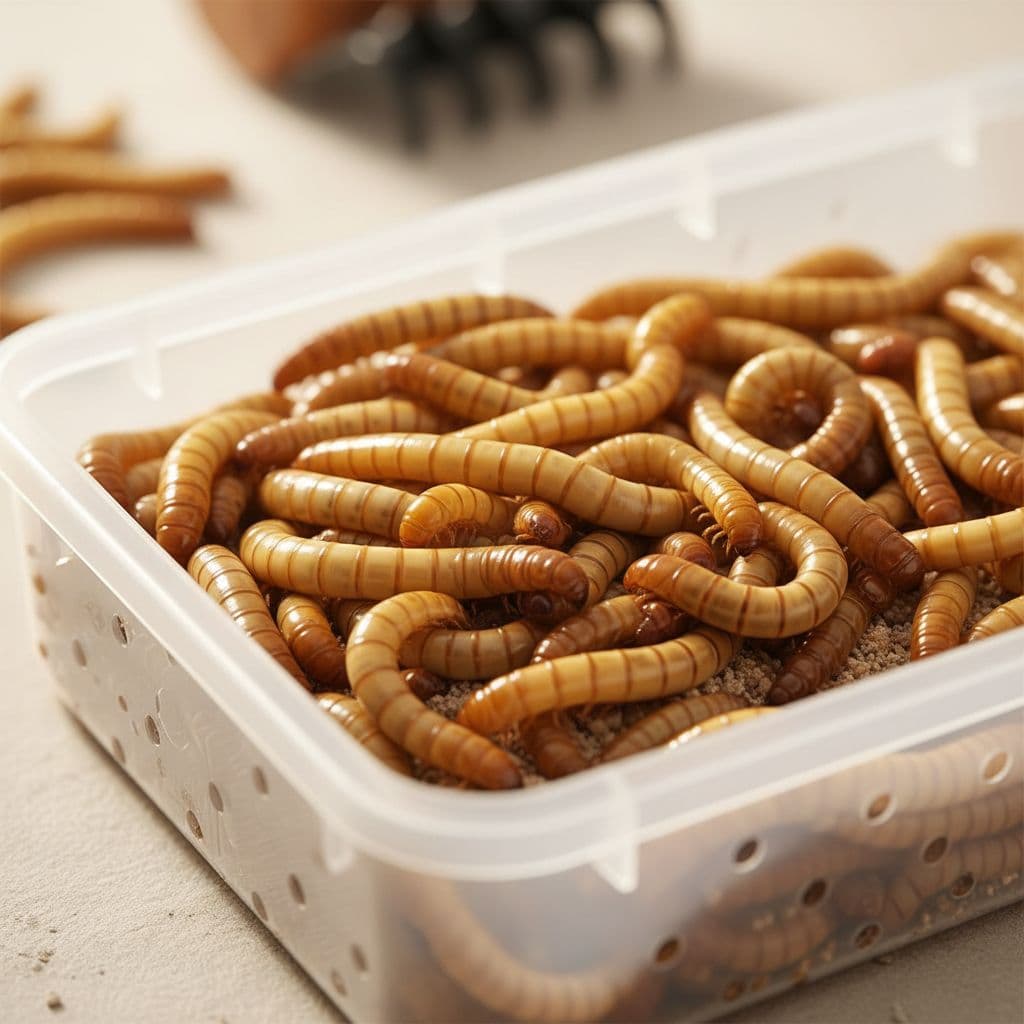
For poultry keepers, the life cycle of these insects is essential. The larvae grow quickly, thrive in controlled conditions, and can be harvested efficiently before they mature. Research on using yellow mealworms as poultry feed has shown they can support broiler growth and serve as a reliable alternative protein source, which is why they continue to gain attention in practical farming discussions. See the broader review on yellow mealworm protein in poultry diets and the study on broiler performance with mealworm meal.
A simple look at the mealworm life cycle
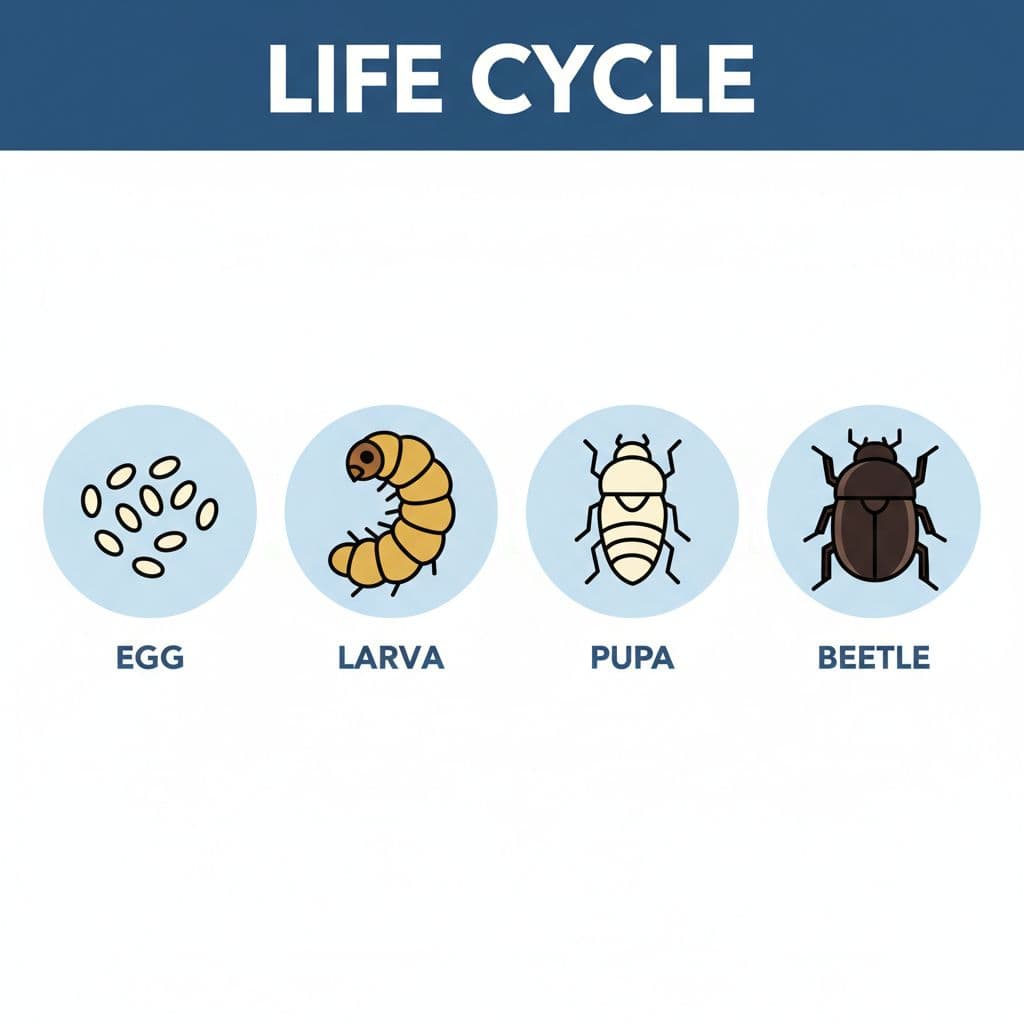
The mealworm life cycle is straightforward to manage. First, the darkling beetle lays eggs. Those eggs hatch into small yellow larvae, which represent the larval stage that farmers harvest for feed. After the larval stage, the insects transition into the pupal stage before eventually emerging as adult beetles to restart the cycle.
That specific larval stage is the one that matters most for feed production. It is active, easy to rear, and rich in nutrients. Once the insects move past this phase, they are no longer ideal for poultry feeding, so successful farmers focus on harvesting the larvae at the peak of their nutritional value.
Why local production matters for Kenyan farms
Local production makes yellow mealworms practical for small farms. When farmers raise them nearby, they cut transport needs, reduce dependence on outside suppliers, and maintain a steady protein source close at hand. That consistency is vital when feed prices rise or deliveries are delayed.
It also fits well with circular farming. Mealworms can help turn farm by-products into high-quality feed, giving agricultural waste a second life. On mixed farms, this process supports chickens and other livestock without putting additional pressure on land or water resources.
For Kenyan farmers, the trust comes from consistent results. Yellow mealworms are local, manageable, and highly productive in small spaces. They provide a reliable way to build a stable feed supply while keeping the overall farming system efficient and sustainable.
The main reasons chickens and birds benefit from yellow mealworms
Yellow mealworms give chickens and many birds a simple, high-value feed boost. They act as a nutrient-rich and high-protein snack that provides fat and quick energy in a form birds can eat with little effort.
For farmers, that means a practical supplement for chicks, laying hens, molting birds, and backyard flocks. For bird owners and watchers, it means a feed that many species find hard to ignore. The key is balance, because mealworms work best as part of a mixed diet.
### How protein supports growth, feathers, and egg production
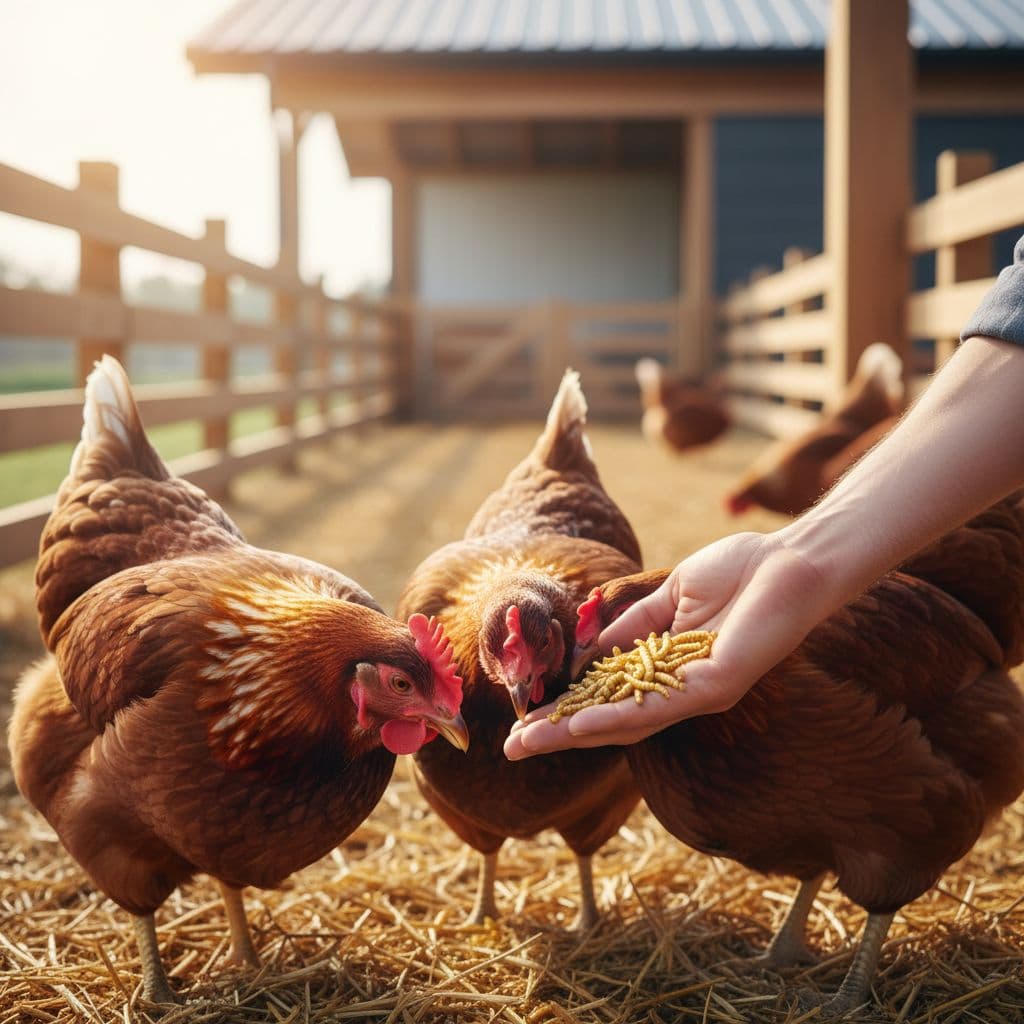
Protein is one of the main reasons yellow mealworms Kenya farmers value so much. Chicks need it for fast body growth, strong muscle development, and healthy feather formation. When birds do not get enough protein, they often grow slowly and look weak.
Mealworms are also helpful for molting chickens. At that stage, birds lose old feathers and grow new ones, which takes a lot of nutrients. A protein-rich treat can support that process and help birds recover their condition more smoothly.
Laying hens benefit too. Better nutrition helps them stay active, maintain body condition, and keep up egg production. Many farmers also notice that consistent, quality nutrition leads to yellow-yolked eggs. Mealworms are not a full layer feed, but they can give hens an extra lift when used in moderation.
A useful rule is simple: use mealworms as a supplement, not a main ration. For a closer look at poultry feed use, see mealworm nutrition for chickens.
Why birds in gardens and farms respond well to mealworms
Many birds react to mealworms almost immediately because the feed is easy to eat and rich in energy. Smaller birds especially appreciate food that does not need much tearing or breaking apart. That makes mealworms a good option for garden feeders and farm settings.
Parent birds also use them to feed chicks. During nesting season, adults need fast, compact food they can carry back to the nest often. Mealworms fit that need well, especially when insects are scarce or when bad weather limits natural food.
Bird watchers often notice that mealworms attract a wider mix of species. Robins, wrens, chickadees, bluebirds, and similar birds can all show interest. Live mealworms usually work well for active feeding, while dried mealworms are easier to store and handle.
Mealworms are a supplement, not a full diet, but they can make a big difference when birds need extra energy.
For broader context on how mealworm protein compares in animal feed, this review of mealworm larvae as an animal protein source gives a useful overview.
What mealworms do not replace in a healthy diet
Mealworms are useful, but they do not replace the rest of a good feeding program. Chickens still need grains for energy, greens for fiber and vitamins, clean water every day, and a proper chicken feed that matches their age and purpose.
That matters because too much mealworm feeding can throw off balance. If birds fill up on treats, they may eat less of the feed that keeps them healthy over time. The result is a short-term boost without steady nutrition.
A practical feeding plan keeps things simple:
- Offer mealworms in small amounts.
- Mix them with a balanced poultry ration.
- Keep fresh water available at all times.
- Use them as a treat, training aid, or seasonal boost.
Used this way, yellow mealworms Kenya farmers rely on can support healthy birds without replacing the basics. That balance is what makes them useful, affordable, and easy to manage on real farms.
How yellow mealworms fit Kenya’s farming needs
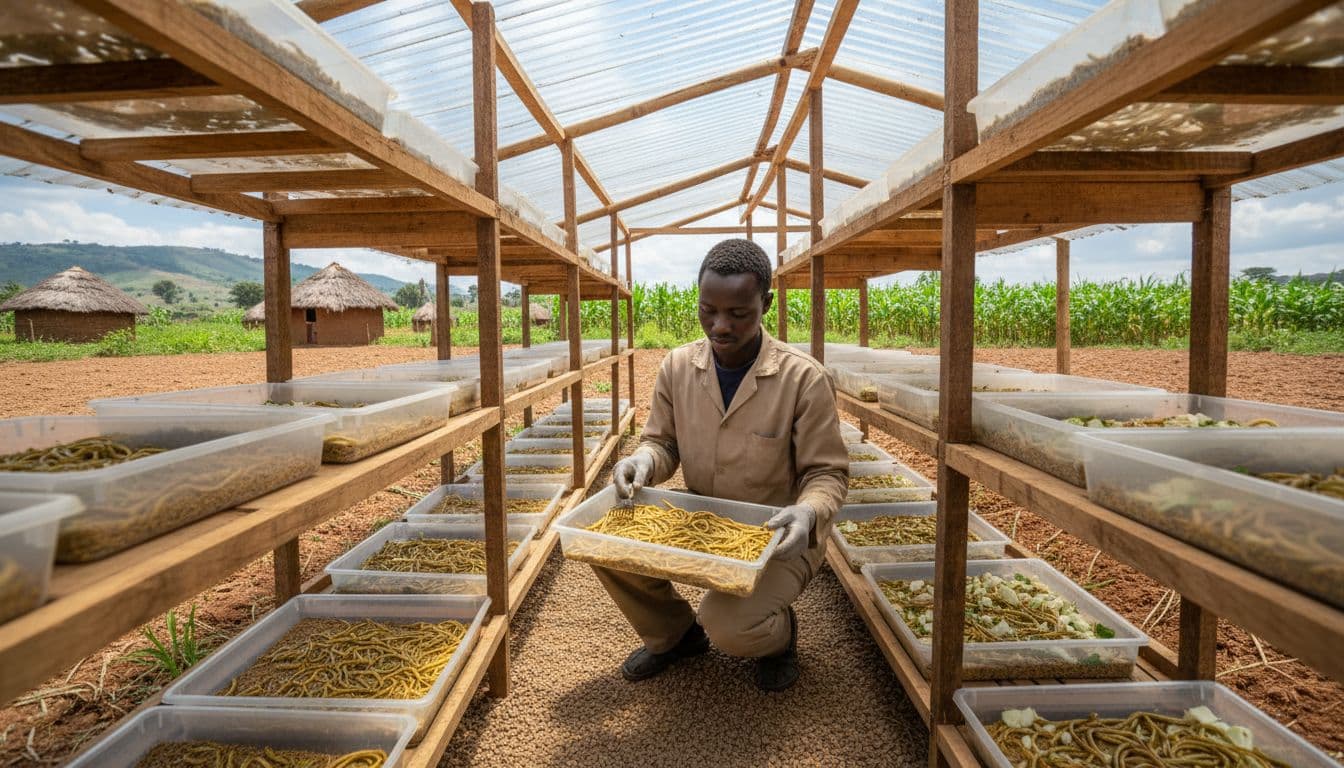
Yellow mealworms make sense in Kenya because they fit the way many farms already work. Smallholders often manage tight budgets, limited space, and uneven feed supply, so a local protein source can make daily feeding easier to plan. When mealworms are used as a supplement, they can help stretch expensive rations without asking farmers to rebuild their whole feeding system.
They also fit a broader farming pattern. In many Kenyan households, poultry sits alongside crops, kitchen scraps, and other small livestock. That mix creates a good setting for insect protein, since mealworms can be raised locally and turned into feed without heavy land use or long transport chains. Research on the growth of poultry farming in Kenya shows that farmers are increasingly open to these options when prices and access make sense, which matters for widespread adoption.
### A lower-cost protein option for small farmers
Feed is one of the biggest costs in poultry farming, and protein ingredients usually take the hardest hit from price swings. Yellow mealworms can help here by replacing part of the fishmeal or soymeal in a ration, not all of it. That partial replacement matters, because even a modest reduction in purchased commercial feed can ease pressure on the farm budget.
For small farmers, the value is practical. A homegrown insect source can help them feed birds more consistently when store-bought options become too expensive or hard to find. It also gives them a way to make better use of farm by-products, turning materials that might go to waste into usable animal protein. While some producers also consider the black soldier fly larva as an alternative, yellow mealworms remain a favored choice due to their simple life cycle and ease of handling in small settings.
A Kenya-focused study on insect-based feed found that replacing a portion of conventional poultry feed could free up food crops and create wider economic gains, while supporting jobs and local supply chains. For a deeper look at those findings, see insect feed effects in Kenya. The main takeaway is simple; mealworms do not need to replace the whole ration to matter. Used well, they can make the rest of the feed go further.
Mealworms work best as a supplement. They help reduce pressure on costly protein feeds, but they do not replace a balanced ration.
Small farmers also care about reliability. Local insect production can be easier to manage than waiting on distant suppliers, and that makes feeding plans less fragile. For many households, that kind of stability is as valuable as a lower price.
Useful for chicken keepers, bird lovers, and small feed businesses
Yellow mealworms are not only for commercial operations. Backyard chicken keepers use them as a high-value treat and a useful protein boost for chicks, layers, and birds that need extra support during molting. Because the feed is easy to offer and easy for birds to eat, it fits simple home setups well.
Bird lovers also use mealworms for wild birds. Many insect-eating species take them quickly, especially when natural food is scarce or nesting birds need compact, energy-rich food. That makes mealworms a good option for garden feeders and seasonal bird care.
Small feed businesses can find room here too. Some entrepreneurs may rear mealworms for their own birds, while others can sell them in dried, fresh, or processed form. Since local demand is growing, small-scale production fits perfectly into a wider market for poultry feed and organic farming inputs. A Kenyan survey on insect-based feeds found strong interest among smallholders, which points to room for local sales and broader use. See Kenyan farmers and insect feed demand.
This is where the yellow mealworms Kenya farmers appreciate can support food security in a real way. Local insect protein helps keep money in the community, gives farmers another feed option, and makes the whole system less dependent on imported or expensive inputs. For households and small businesses alike, that is a useful shift.
What good mealworm farming looks like on a small scale
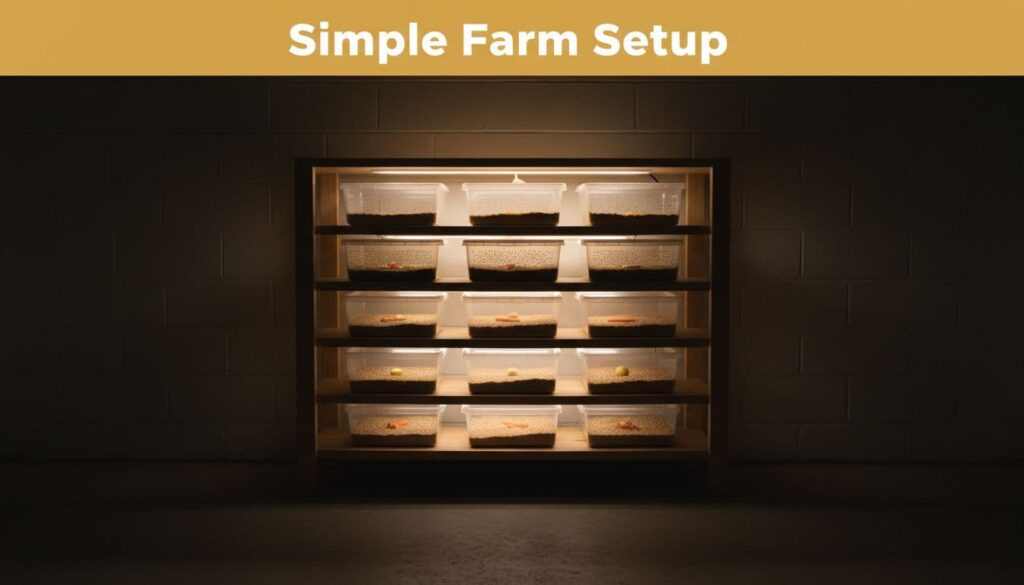
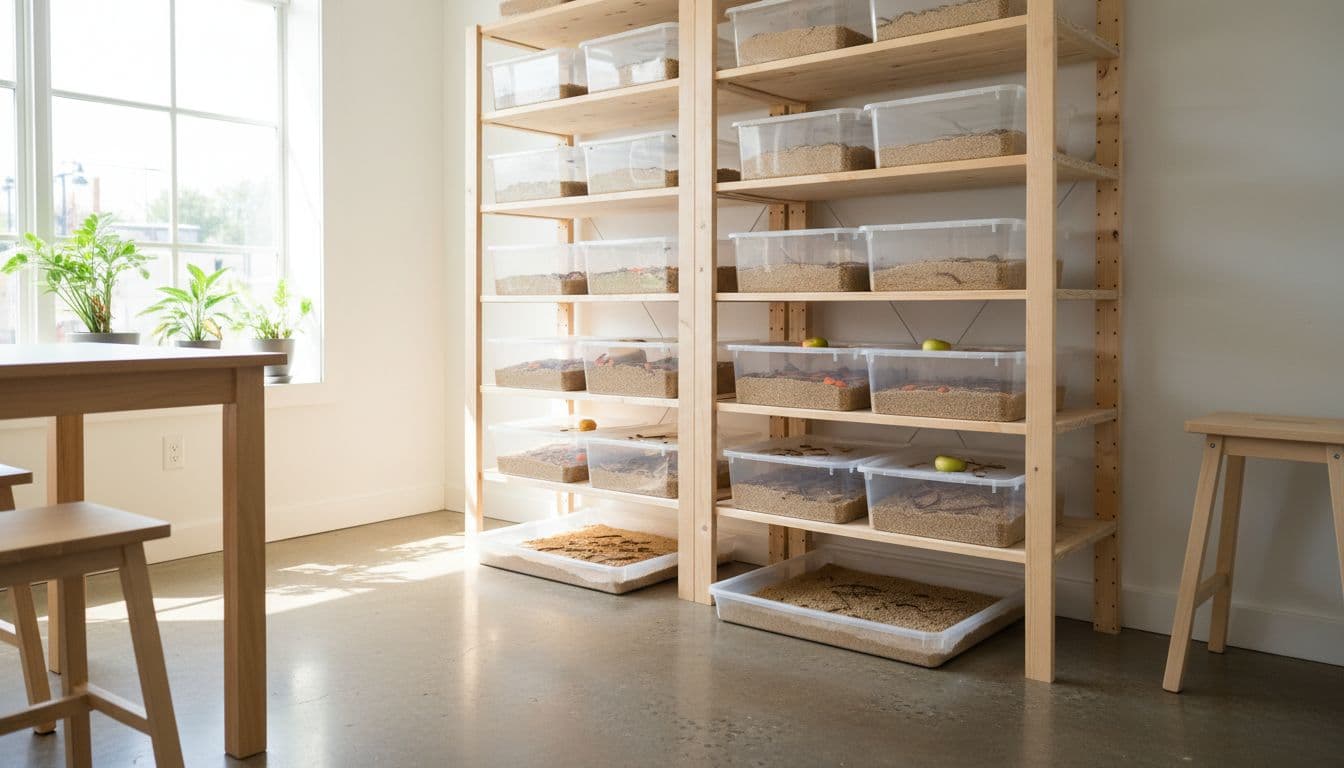
Good mealworm farming is simple, but it is not careless. On a small farm, the best setup is clean, dry, and easy to check every day. That matters because mealworms grow best in steady conditions, and a tidy system protects both the insects and the feed value they bring to your birds.
Small producers often do better with low-tech systems. A few trays, a dry feed base, and regular attention can produce better results than a crowded setup with too many moving parts. For Kenyan farmers and small businesses, that kind of setup is easier to manage, easier to clean, and easier to expand later.
In Kenya, insect farming for poultry feed is generally considered a low-risk agricultural activity, though farmers should ensure their facilities remain hygienic and adhere to general animal welfare standards. While small-scale production for personal farm use is straightforward, those planning to sell mealworms commercially should check with the Kenya Bureau of Standards (KEBS) and local agricultural authorities for guidance on feed safety and quality compliance.
Basic setup, feed, and care
A small mealworm unit does not need fancy equipment. A dry plastic container, shallow trays, and a place with good ventilation are enough to start breeding mealworms. The key is to keep the bedding dry, because damp conditions invite mold and pests fast.
For feed, use a dry base such as wheat bran, oats, or a similar edible bedding. This substrate provides both a home and nutrition for the colony. Then add small pieces of a moisture source like carrot or potato in controlled amounts. That gives the worms water without soaking the whole bin. A simple routine works best: monitor temperature and humidity, feed lightly, check often, and remove any spoiled material right away.
Regular care keeps the colony stable. You should sift out worm castings, replace old feed, and separate different life stages when needed. If you want a broader look at beginner setup ideas, this mealworm farming guide gives a useful comparison of basic container and feed choices.
A clean setup usually follows a few simple habits:
- Keep trays shallow so you can see what is happening.
- Store them in a cool, dry place away from direct sun.
- Check moisture pieces before they rot.
- Remove dead insects and waste often.
- Use the same routine each week so nothing gets missed.
That steady care is what keeps yellow mealworms Kenya farmers raise healthy and usable.
Farmers can source their initial mealworm starter culture from established insect farming entrepreneurs, reputable local agricultural research institutions, or online marketplaces specializing in poultry inputs. Many Kenyan farmers also find success by connecting with regional agricultural cooperatives that facilitate the exchange of starter colonies among smallholders. It is important to ensure your source provides healthy, active larvae to ensure a robust foundation for your colony.
Harvesting mealworms safely and keeping them usable
Harvesting matters as much as raising. If you are breeding mealworms, handling them badly causes them to lose quality fast, and dirty feed can put poultry or other animals at risk. Good harvest practice protects the farmer’s work and keeps the product useful for feed.
The first step is to separate the mealworms cleanly from the substrate and waste. After that, dry them properly or store them in a cool, clean place if they will be used soon. Wet mealworms spoil quickly, so moisture control is important at every stage. Clean handling also makes the feed easier to store, measure, and sell.
Clean harvesting is not extra work, it is part of the product.
Farmers who plan to sell or use mealworms regularly should keep their harvest bins and tools washed and dry. That lowers contamination and helps maintain a steady supply. For a practical reminder on moisture, waste removal, and clean bin care, this mealworm hygiene guide outlines the basics well.
In small-scale farming, good handling protects two things at once: the animals that eat the mealworms and the farmer’s investment. Better care means less waste, fewer losses, and a more reliable feed source.
Common mistakes that reduce mealworm quality
Most mealworm problems start with moisture. Too much water causes mold, bad smells, and insect pests. A few wet scraps are fine, but a damp bin is trouble. The safest approach is to give moisture in small amounts and remove leftovers before they soften.
Poor hygiene is the next big problem. Old feed, dead insects, and packed waste make the bin dirty and slow down growth. If the container stays crowded or unclean, the colony weakens and the harvest gets smaller. Good producers keep the system simple and clean, then repeat the same checks often.
Low-quality feed also hurts results. Mealworms need fresh, dry bedding and clean grain-based feed. While some farmers experiment with kitchen waste, it is important to ensure it does not introduce excess moisture. Overcrowding creates the same problem, because crowded bins heat up, fill with waste, and make it harder to separate healthy insects from weak ones.
A few mistakes to avoid stand out clearly:
- Leaving wet vegetable pieces in too long.
- Packing too many worms into one container.
- Using moldy bran or spoiled grain.
- Skipping regular cleaning.
- Mixing healthy worms with waste and dead insects.
Good mealworm farming is really about control. Keep it dry, keep it clean, and keep it simple, and the colony will reward that attention with better quality feed.
The bigger picture, from feed to waste reduction
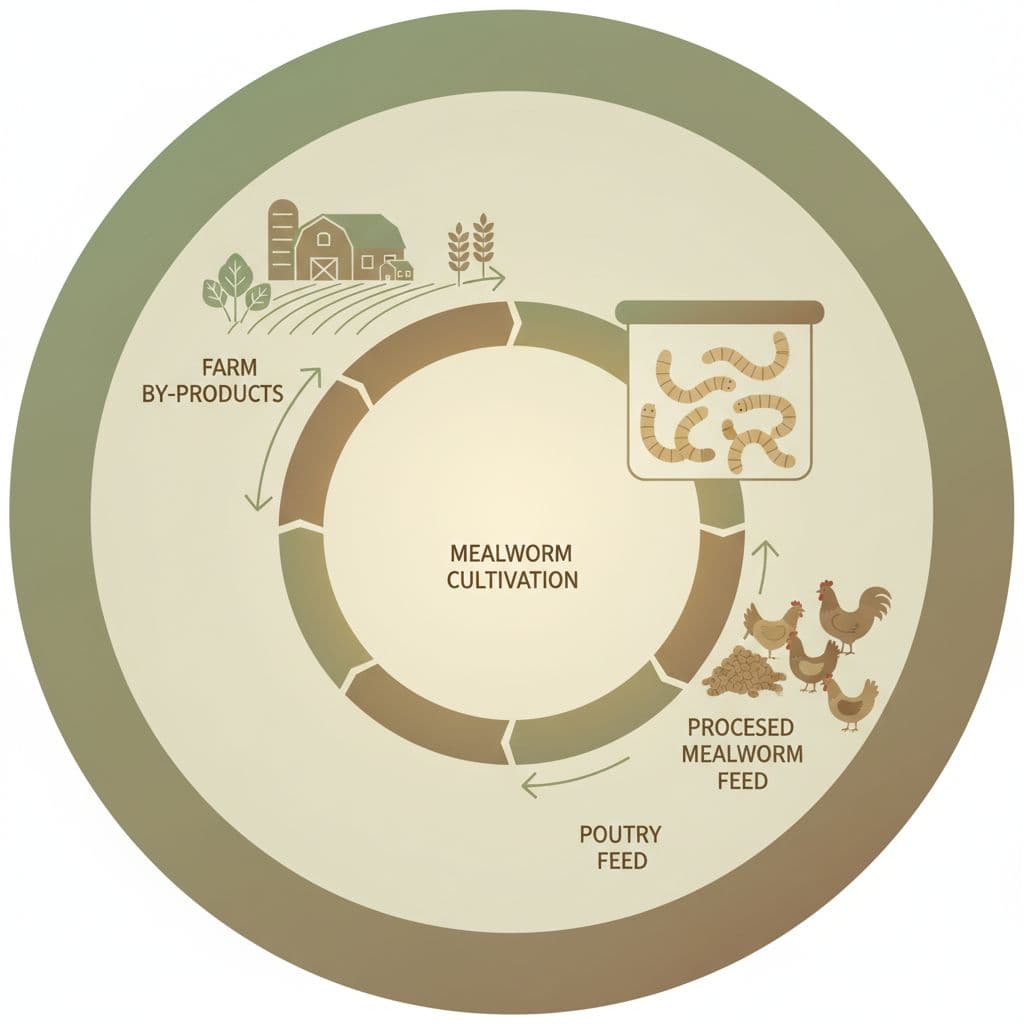
Yellow mealworms make sense because they do more than feed chickens. They also help farmers use organic leftovers in a smarter way. That creates a simple loop: crop scraps, bran, and other by-products feed the insects, then the insects feed poultry, and the cycle keeps value moving instead of waste piling up.
This is where yellow mealworms Kenya farmers use fit into a larger farming system. They help reduce pressure on imported protein ingredients, keep money circulating locally, and turn low-value materials into something useful. In a country where feed prices can jump fast, that matters on the farm and in the ledger.
### How insect farming supports a circular economy
A circular farming system tries to waste less and use more of what the farm already has. Mealworms fit that model well because they can turn dry organic waste into a reliable source of sustainable protein. Instead of buying all feed ingredients from outside, farmers can use local inputs and get more from every bag of bran, kitchen scrap, or grain leftover.
That approach also helps with waste reduction. Insect farming can use materials that might otherwise be discarded, and that keeps waste streams smaller. Research on circular insect production shows that insects can bio-convert low-value organic matter into protein for animal diets, which makes them a practical option for poultry systems that need cheaper feed inputs. See insect meals in a circular economy for a broader look at how this works in animal nutrition.
For small farmers, the benefit is easy to see:
- Less organic waste sitting around.
- More value from farm by-products.
- Lower dependence on expensive imported ingredients.
- A steadier local feed supply.
Mealworm farming also supports cleaner production. When the feed loop stays local, transport needs drop, and so does the pressure on land, water, and cash. Because a healthy colony acts as a self-renewing food source, the system works harder without asking the farmer to spend more on every input.
When waste becomes feed, the farm keeps more value inside the system.
Why this matters for future farming in Kenya
Kenya needs farming systems that can handle high feed costs, climate stress, and pressure on natural resources. Yellow mealworms fit that need because they support climate-smart farming without demanding large land areas or heavy infrastructure. They let farmers produce sustainable protein in a small space, which matters for both poultry keepers and small feed businesses.
They also support food security in a practical way. When farmers spend less on feed, they can keep birds longer, raise more animals, and protect household income. That extra stability can help families stay productive even when maize, soy, or fishmeal prices rise.
The environmental benefits are just as important. Circular insect farming can reduce waste, support soil health when by-products are returned as fertilizer, and lower pressure on imported feeds. Broader reviews of insect protein also point out that insect meal can replace part of soybean meal or fishmeal in poultry diets, while helping cut pollution from organic wastes. A useful overview is available in Frontiers’ review on insects for poultry nutrition.
For Kenya, the long-term value is clear. Mealworms support a feed system that is local, efficient, and easier to sustain. They help farmers make better use of what they already have, while keeping chickens fed and farm waste under control.
Frequently Asked Questions
Can mealworms replace my chickens’ regular feed entirely?
No, mealworms should only be used as a protein-rich supplement to a balanced diet. Chickens still require grains for energy, essential greens for vitamins, and access to clean water to maintain long-term health and productivity.
Are yellow mealworms the same as worms used for composting?
They are different, as yellow mealworms are the larval stage of a beetle and are used specifically for their high protein content. Composting worms, like red wigglers, are better suited for breaking down organic matter to create soil nutrients rather than serving as livestock feed.
How can I prevent my mealworm colony from failing?
Success depends on maintaining a dry, clean environment, as excess moisture is the leading cause of mold and colony death. Keep the bins well-ventilated, avoid overfeeding moisture-rich scraps, and remove any dead insects or waste materials regularly.
Do I need a license to farm mealworms in Kenya?
Small-scale production for personal farm use is generally straightforward and low-risk. However, if you plan to sell mealworms commercially as a feed product, you should contact the Kenya Bureau of Standards (KEBS) and local agricultural authorities to ensure your operations meet necessary quality and safety standards.
Conclusion
Yellow mealworms give Kenyan chicken farmers a practical way to add protein-rich feed without pushing costs too high. They support growth, feather recovery, and egg production, while also giving birds a feed they enjoy.
They also fit small-scale farming well. Mealworms can be raised locally in little space, which helps reduce dependence on expensive imported protein sources like soy and fishmeal. That makes them a smart option for farmers who want better feed control and a cleaner, more efficient system.
For bird lovers and poultry producers alike, yellow mealworms serve as an exceptional protein source that enhances overall flock health. Because they integrate so seamlessly into a daily chicken feed routine, they remain a sensible, sustainable choice for Kenyan farmers, rather than just a passing trend.