

Chicken feed prices keep climbing, and that leaves many farmers looking for a local protein source they can trust. That is why mealworms for chicken feed Kenya (Tenebrio molitor) are getting more attention; they are rich in protein, easy to raise, and fit well on small farms.
For many poultry keepers, mealworms offer a practical way to cut costs without giving up feed quality. Chickens love this high protein snack, and farmers can use them as a supplement alongside regular rations, rather than as the only feed source.
This post explains why Kenyan farmers choose mealworms, how they support healthy chickens, and what you should know before adding them to your own feeding plan.
Key Takeaways
- Cost-Effective Protein: Mealworms offer a budget-friendly way for Kenyan farmers to supplement poultry diets, helping reduce reliance on expensive, imported commercial feeds.
- Nutritional Benefits: High in essential protein and amino acids, mealworms support faster muscle growth, improved feather repair, and consistent egg production in laying hens.
- Space-Efficient Production: Because they can be reared using vertical farming techniques, mealworms are ideal for small-scale farms where land and resources are limited.
- Circular Farming: Mealworm colonies can be raised using farm byproducts and kitchen waste, turning low-value scraps into high-quality poultry nutrition and useful organic fertilizer.
The feed cost problem pushing farmers to look for better options
Feed costs sit at the center of poultry farming pressure in Kenya. When commercial feed gets too expensive, farmers feel it in every part of the business, from daily cash flow to flock size and egg sales. Many smallholders cannot absorb those swings for long, so they start looking for local ingredients they can raise, buy in small amounts, or mix into existing rations.
### Why commercial chicken feed strains small farm budgets
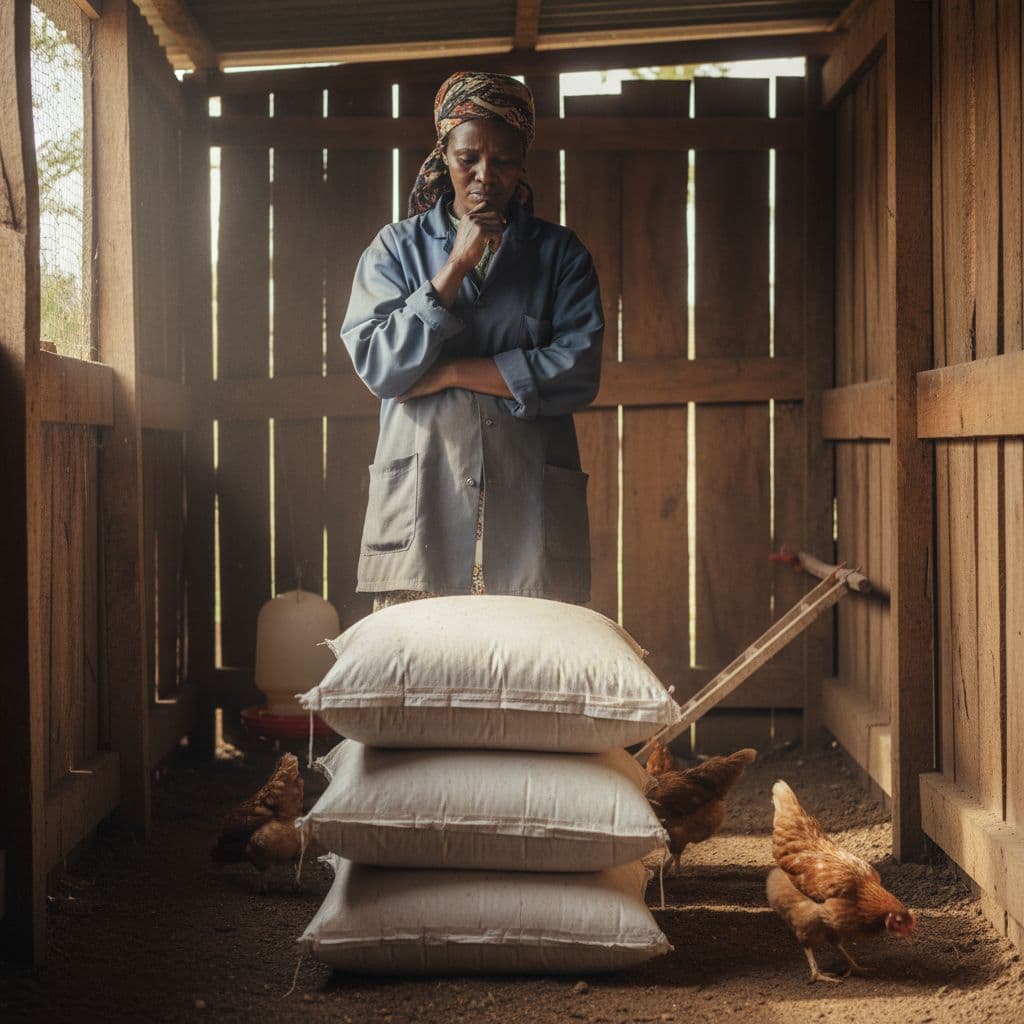
Commercial feed prices keep climbing because key ingredients like maize and soybean meal are expensive, and Kenya relies on imports for part of that supply. Fuel costs, transport, middlemen markups, and weak exchange rates add more pressure. Recent reporting has also pointed to a sharp rise in feed prices, which has pushed many farmers to consider cheaper homemade options or explore soy-free poultry feed to bypass supply chain issues.[^feed-prices]
For a small poultry keeper, this is not a minor inconvenience. It changes the whole math of the farm.
- Profit shrinks fast when feed takes most of the daily budget.
- Egg income feels thinner because more money goes into keeping birds fed.
- Flock growth slows when farmers cannot afford enough balanced feed.
- Expansion gets delayed because buying more birds means buying more feed.
That is why many farmers want a source they can produce locally or purchase in smaller, manageable amounts. It gives them more control. It also helps when cash is tight and feed prices move without warning.
When feed costs rise faster than egg prices, the farm loses room to breathe.
Why protein matters so much for healthy chickens
Protein is the vital component of poultry nutrition that helps chickens grow, build feathers, and recover after stress. It also supports egg production, which is why laying hens need a consistent intake to maintain their output. Without enough protein, birds grow more slowly, feather quality drops, and overall health suffers.
For poultry keepers, that makes protein one of the first things to protect. A cheaper feed is only useful if it still supports healthy birds. That is why stronger feed options matter so much, especially for farmers searching for mealworms for chicken feed Kenya as a practical supplement. By incorporating insect protein, farmers can provide high quality nutrients without the volatility associated with traditional commercial sources.
Protein-rich feed helps chickens:
- Build muscle during growth.
- Replace worn feathers.
- Stay active and recover faster.
- Maintain egg production in laying birds.
In short, farmers are not just looking for lower costs. They are looking for feed that keeps birds productive without draining the farm budget.
[^feed-prices]: Competition Authority reports 37% rise in chicken feed prices
What makes mealworms a smart choice for poultry feed
Mealworms fit poultry feeding habits better than many farmers expect. Chickens are natural scratchers and peckers, so a feed they can hunt for feels familiar and gets their attention fast. That matters on busy farms, because birds that eat well usually settle faster and waste less feed.
Mealworms also bring concentrated nutrition in a small serving. They are rich in protein, and they contain fats and amino acids that help support growth, feather repair, and daily energy needs. For farmers using mealworms for chicken feed Kenya, that makes them useful as a supplement when birds need extra support, not just as a treat.
### A protein-rich feed chickens naturally enjoy
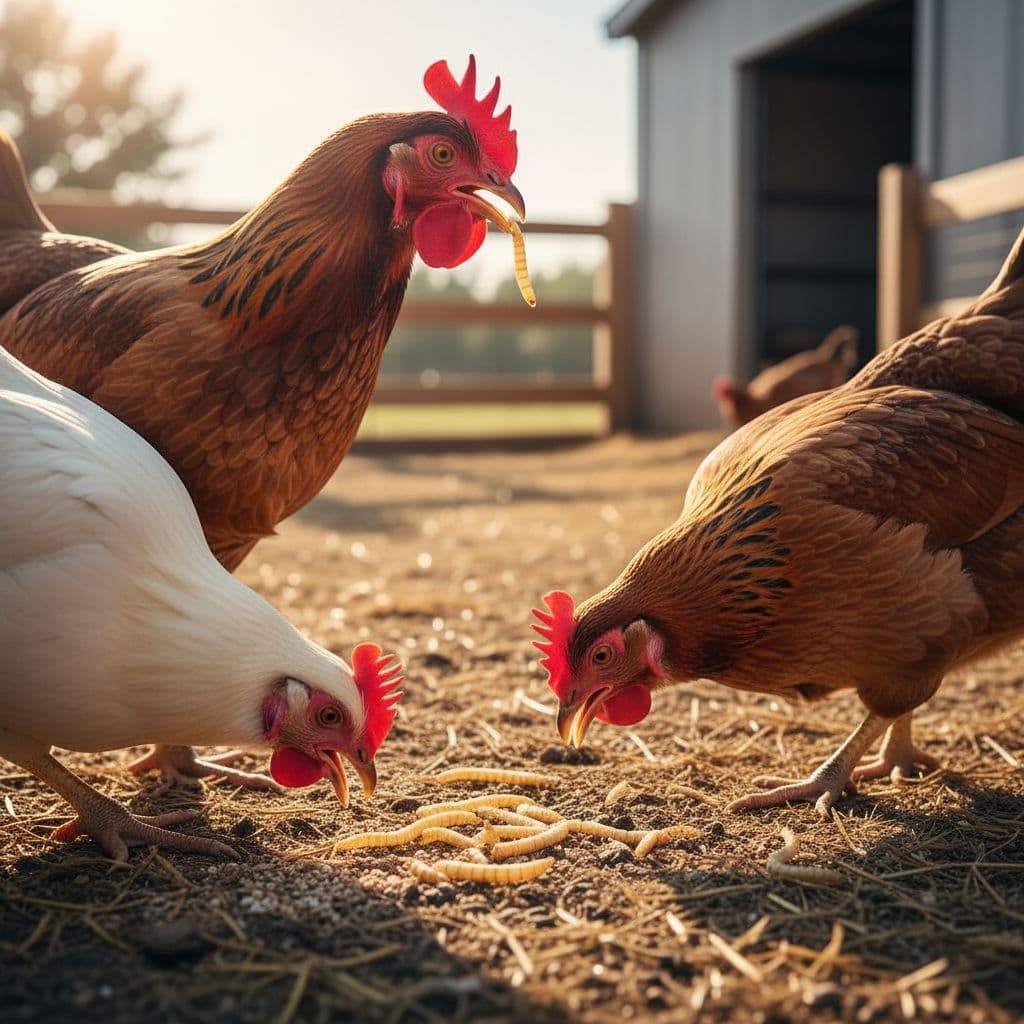
Chickens do best when feed matches their instincts. They peck, scratch, and search the ground for insects, seeds, and small bits of food. Mealworms fit that pattern well, acting as a high protein snack that birds take to quickly. Beyond the nutritional value, many farmers find that including these insects in the diet helps produce yellow-yolked eggs and that distinct, delicious kienyeji tasting chicken that consumers often prefer.
That natural appeal can make feeding easier. Instead of forcing birds to adapt to an unfamiliar supplement, you give them something that looks and acts like food they already want.
A few practical benefits stand out:
- Better feed interest because chickens usually peck at mealworms eagerly
- Less waste when birds eat the supplement quickly
- Simple feeding routines since mealworms are easy to mix into regular rations or scatter in small amounts
- Helpful for training young birds to feed well
For flock owners, that combination matters. A feed ingredient can be nutritious, but if birds ignore it, it loses value. Mealworms solve that problem by being both attractive and useful.
Useful during growth, laying, and stress periods
Birds need extra protein at certain times, and mealworms help fill that gap. Chicks and fast-growing birds use protein to build muscle and stay strong. Laying hens also need steady protein to keep egg production on track.
Mealworms are especially handy when birds are under pressure. During molting, they need help with feather regrowth. When a bird is sick or recovering, extra protein can support the return to normal condition. Even stress from heat or changes in the flock can affect appetite and body condition.
That is why many farmers use mealworms as a targeted boost, not a full ration. They work best as a support feed during demanding periods.
How mealworms can support feathers, energy, and egg output
Farmers often notice the effects in daily flock behavior. Birds may look fuller, move more actively, and keep better feather cover. In laying hens, the extra protein can support steadier egg production and better body condition over time.
The gains are practical, not flashy. Stronger feathers mean less visible wear. Better energy means birds stay active. More stable egg production means fewer dips when hens need support most.
A balanced poultry feed still matters, of course. Mealworms work best as a smart add-on that helps chickens perform well without overcomplicating the feeding plan.
Why mealworms fit Kenyan farming conditions so well
Mealworms are an ideal sustainable feed source for Kenyan farmers because they align perfectly with existing small-scale agricultural practices. Most poultry keepers manage limited space and tight budgets, making them look for reliable, affordable ways to produce feed near the homestead. Mealworms fit this need well, providing a high-quality local protein source that does not require large acreage or expensive machinery.
They also support the growing movement toward circular farming. By choosing a feed solution that minimizes land use and recycles organic material, farmers can better support both their flock and their overall farm budget.
In Kenya, the insect farming sector is currently evolving under general agricultural guidelines, though formal regulations specific to small-scale insect rearing for poultry feed are still maturing. Farmers should prioritize food safety and hygiene to ensure their insect products are clean and free from contaminants before introducing them to the flock. While some farmers explore black soldier fly larvae as an alternative insect protein, mealworms remain a favored choice for many due to their ease of management. It is always a good idea to consult with local agricultural extension officers or the Kenya Bureau of Standards for the most current guidance on producing safe, high-quality feed supplements.
They can be grown locally with little space
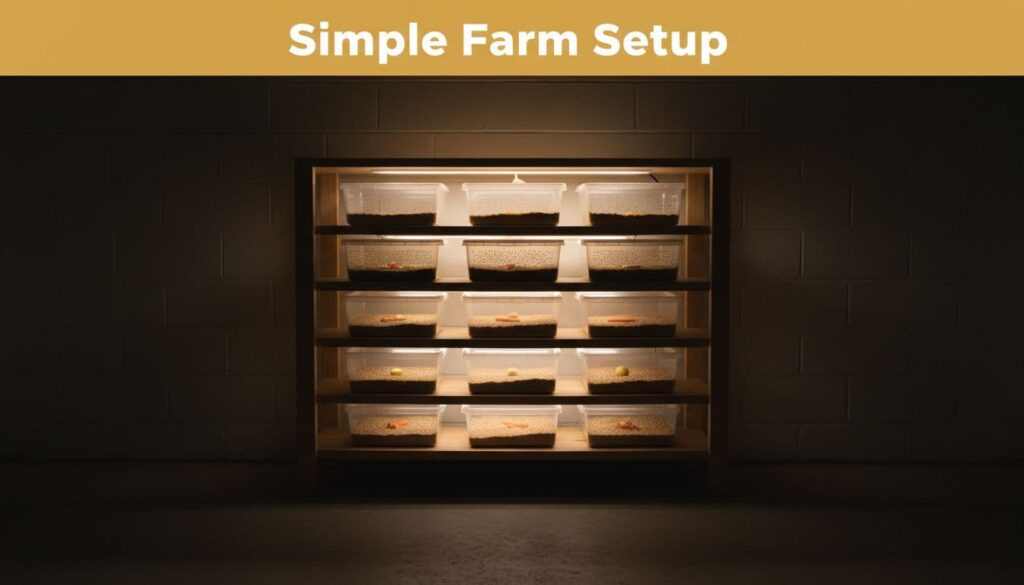
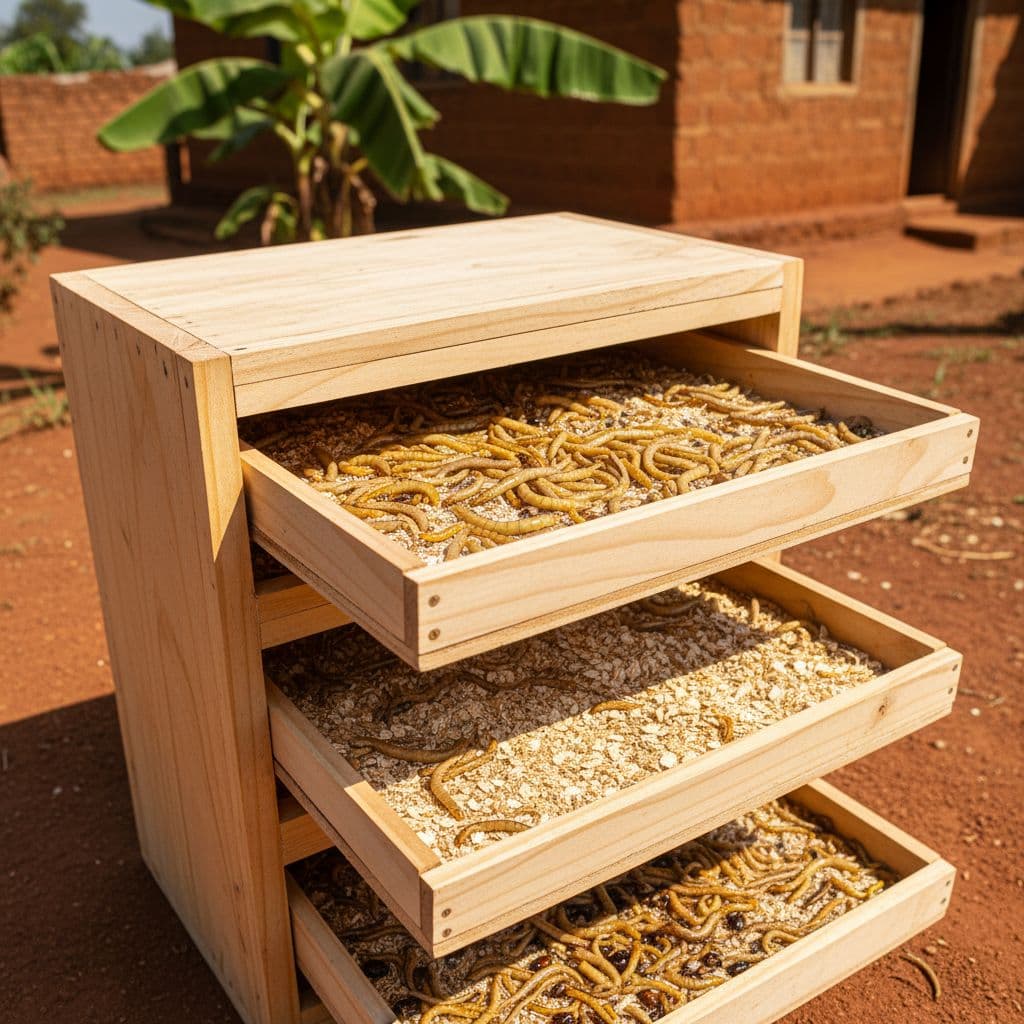
Mealworms are a strong fit for backyard systems because they thrive using vertical farming techniques. By stacking trays in a dry corner, farmers can produce a high volume of protein in a very small footprint. This is a significant advantage in areas where land is already divided among crops, livestock, and family living spaces.
Because these rearing units are compact, they do not compete for space with essential crops like maize. Furthermore, they require less equipment than traditional livestock systems, which lowers the start-up burden for farmers who want to begin small and scale their operations as demand grows.
They can help reduce feed costs over time
Feed prices remain high because maize and soybean meals consistently increase in cost. When farmers raise their own protein, they reduce their vulnerability to market price volatility. Even replacing a portion of commercial feed with home-grown insects can make a measurable difference in the bottom line.
A local mealworm setup gives farmers greater control over their supply chain. It also supports the broader goals of insect feed research in Kenya, which emphasizes how local protein production can ease food-feed competition and strengthen rural incomes. Over time, the savings add up through:
- Reduced cash expenditure on expensive protein supplements
- Fewer trips to the store to purchase feed
- More efficient use of materials already available on the farm
- More predictable feeding costs, even during market price spikes
They support a cleaner, lower-waste farm system
Mealworms can be successfully raised on various farm byproducts and kitchen waste, such as vegetable scraps or bran. This allows farmers to turn low-value materials into nutritious chicken feed, effectively reducing waste while improving efficiency.
This approach is a cornerstone of circular farming, where the output of one process provides the input for another. On Kenyan farms, this leads to less waste, lower disposal pressure, and a more self-reliant feeding cycle. Ongoing research into integrating insects into poultry and fish feeds in Kenya and Uganda further highlights the value of local insect rearing for small-scale systems. For farmers looking to optimize their poultry production, mealworms offer a practical way to save space, utilize local inputs, and convert everyday scraps into high-quality protein for their birds.
How farmers raise mealworms and use them in chicken diets
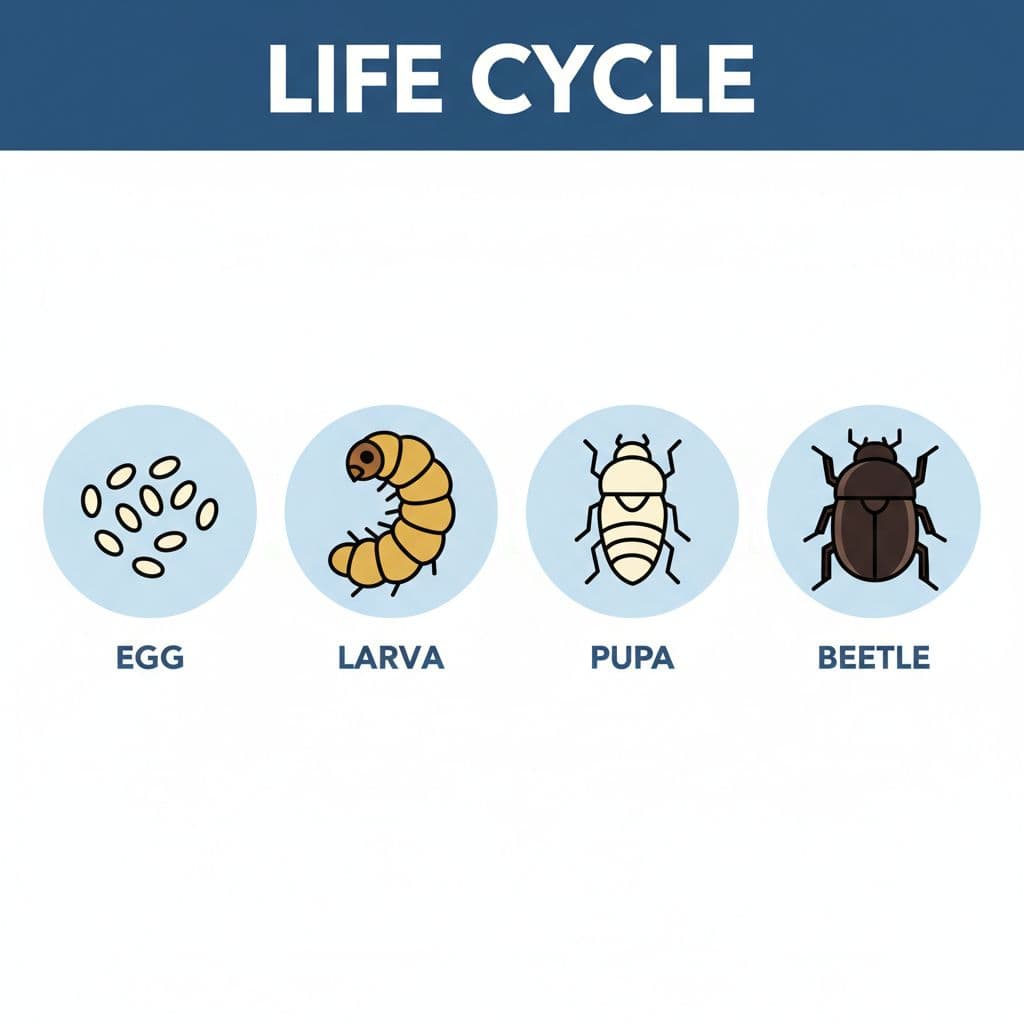
Farmers usually keep mealworms in a simple setup that fits small spaces and daily routines. The goal is steady production, clean conditions, and a feed source that stays safe for chickens. The lifecycle begins with the darkling beetle, which lays eggs that hatch into the larval stage. Eventually, these larvae transition into the pupal stage before emerging again as a mature darkling beetle to restart the breeding cycle. Once the insects reach the harvestable larval stage, farmers can offer them fresh or dried, then mix them into the flock’s regular ration.
### Simple ways mealworms are produced on small farms
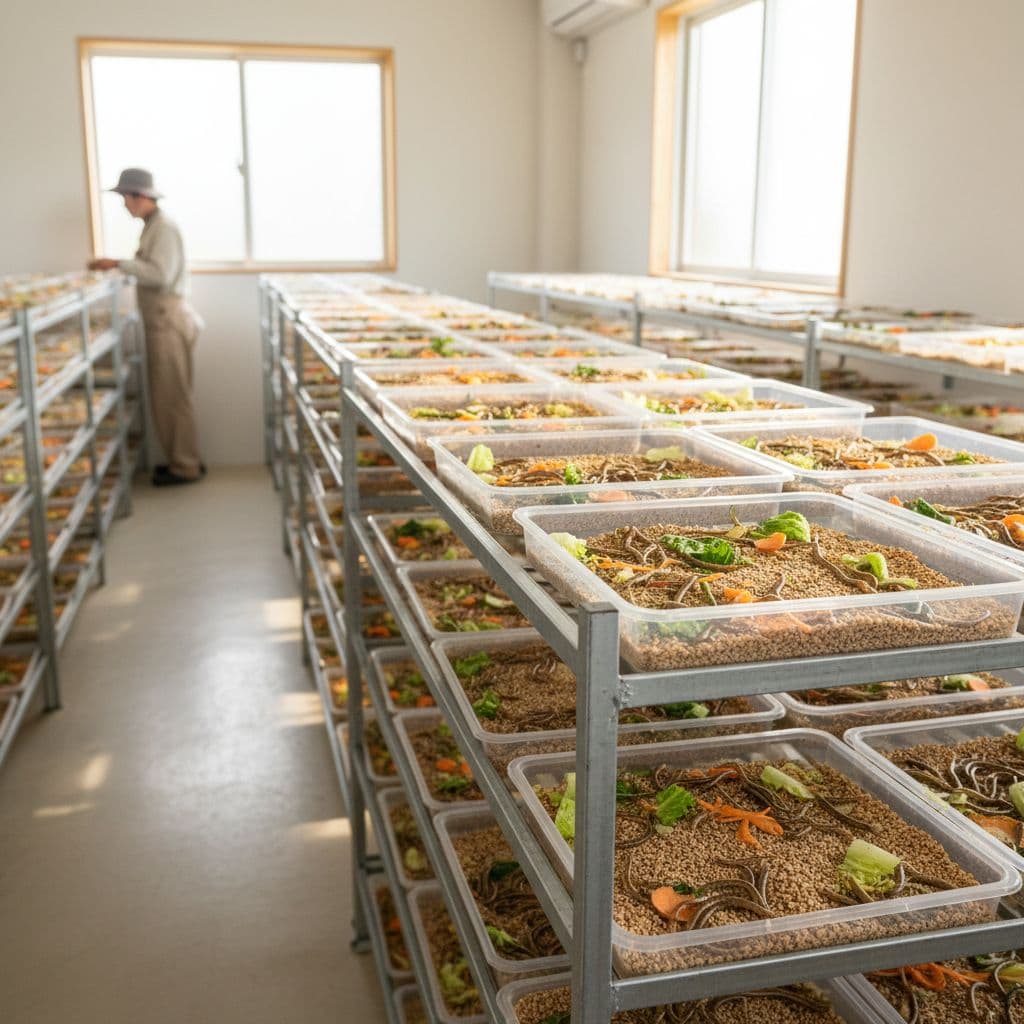
Small farms often raise mealworms in shallow containers or stacked boxes. Farmers add wheat bran as an edible bedding material, then place in safe organic feed materials that the larvae can eat and move through. It is also important to provide a moisture source, such as carrot slices or potato peels, and ensure all containers have adequate ventilation holes to prevent excess humidity.
The setup does not need to be fancy. It needs to stay dry, well-managed, and protected from pests. That is why mealworms work well for farmers who want a small, repeatable system rather than a large barn operation.
A basic rearing setup often includes:
- Containers or trays with ventilation holes that keep the colony secure
- Wheat bran as the primary edible bedding
- A moisture source like vegetable scraps, used carefully
- Regular sorting and cleaning so the larvae remain in the healthy larval stage for harvest
Clean feed and dry storage matter more than complex equipment.
Fresh or dried, how farmers usually feed them
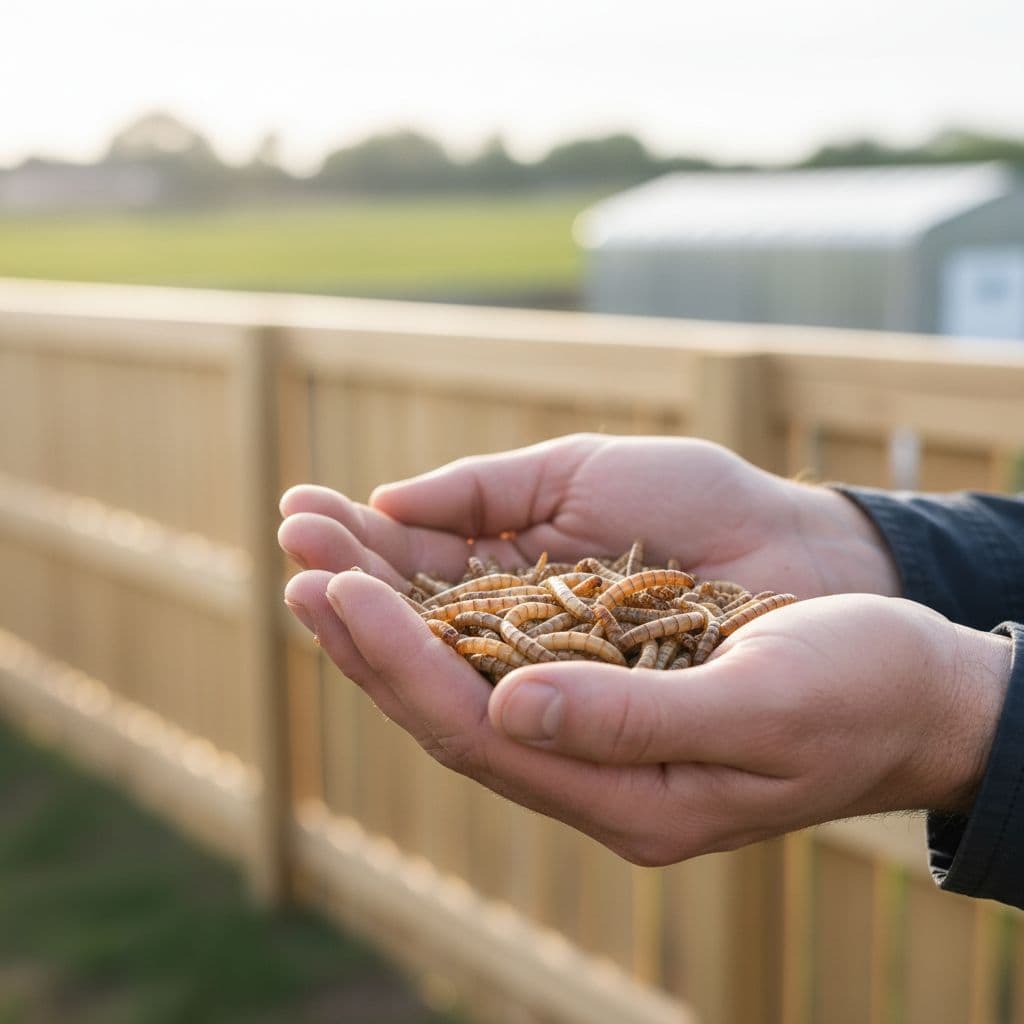
Farmers feed mealworms to chickens in two common ways. Fresh mealworms are useful when birds need a live treat or a little extra moisture. Dried mealworms are easier to store, easier to carry, and last much longer on the shelf.
That difference matters on busy farms. Fresh worms work well for quick feeding, while dried mealworms fit better into daily routines and bulk handling. For many keepers, the dried form is the more practical choice for consistent supplementation.
For a broader look at poultry use, this review on insects in poultry nutrition explains why mealworms are often used as a protein-rich supplement rather than a base feed.
While both are nutritionally effective, home-grown mealworms allow you to control exactly what the insects consume. Store-bought mealworms are convenient but may be processed or dried differently, sometimes lacking the freshness of worms harvested directly from your own rearing trays.
How to mix mealworms with other poultry feed
Mealworms work best as part of a balanced diet. Chickens still need grains, clean water, minerals, and a complete feed that covers their full nutrition needs. Mealworms add protein and energy, but they should not replace everything else.
Farmers usually mix them in small amounts with mash, pellets, or grain-based rations. That way, the birds get the benefit of insect protein without losing the balance that keeps them growing and laying well.
A practical feeding plan keeps it simple:
- Start with the bird’s regular feed.
- Add mealworms as a supplement.
- Keep fresh water available at all times.
- Adjust the amount based on age, activity, and flock needs.
Used this way, mealworms for chicken feed Kenya farmers can raise become a smart support feed, not a stand-alone diet.
What farmers should know before feeding mealworms to chickens
Non-GMO mealworms can improve a flock’s diet, but they work best when you treat them as a supplemental chicken feed. Farmers who rush the process often give too much too soon, then wonder why birds change weight, leave feed behind, or show loose droppings. A careful start keeps the flock steady and helps you see whether these worms fit your birds’ needs.
### Start slowly and watch how the flock responds
Begin with a small amount and let the birds tell you how they handle it. Chickens usually accept these larvae quickly, but appetite, droppings, and activity level matter more than eagerness alone. If hens stay active, keep normal feed intake, and show solid droppings, the supplement is likely sitting well.
A slow start also helps you spot problems early. Too many mealworms can crowd out regular feed, and that can upset the balance of protein, energy, and minerals. Since the protein content of these worms is quite high, it is important to monitor the overall nutritional balance. For that reason, many keepers offer mealworms as a supplemental chicken feed only a few times a week, rather than as a full meal.
Watch for these signs after introduction:
- Normal feeding behavior without sudden refusal of regular feed
- Firm droppings without obvious changes in texture
- Steady energy and normal flock movement
- No sudden gain in body weight in hens that are already well fed
Mealworms should support the ration, not replace it.
Keep mealworms clean, safe, and properly stored
Clean handling matters as much as portion size. Fresh mealworms should come from a trusted source, and dried mealworms need dry storage to prevent mold, dampness, and spoilage. If you raise them yourself, keep the containers dry and remove waste often. Moisture is the fastest way to ruin a good batch.
Store them in a cool, dry place and keep feed bins sealed from pests. Chickens should also have clean water and grit, especially when dried mealworms are part of the diet. That helps them break down the feed properly and lowers the risk of digestive trouble. For more on safe feeding habits, see simple mealworm feeding guidance and mealworms in chicken diets.
When mealworms are clean, dry, and fed in moderation, they fit well into a practical poultry plan.
Why this trend matters for Kenyan poultry farmers and the future of feed
Mealworms matter because they solve more than one problem at once. They help farmers manage feed costs, keep chickens in better condition, and build a supply they can raise closer to home. That mix is hard to beat when commercial rations keep rising and smallholders need a feed plan they can trust.
### Lower costs without cutting corners on nutrition
For many poultry keepers, the biggest value of mealworms is simple: they can reduce pressure on expensive protein ingredients. Research on insect-based poultry feed in Kenya shows that wider use could free up maize and fish for human food, while also supporting jobs and local income. That matters in a country where feed bills can decide whether a farm grows or stalls.[^insect-feed-study]
Mealworms also give birds a strong boost of insect protein. That supports growth, feather repair, and egg laying, so farmers do not have to choose between savings and bird health. Furthermore, many farmers find that incorporating these insects leads to the sought after kienyeji tasting chicken, which is highly valued in the Kenyan market. When used as a supplement, they help farmers stretch the ration without weakening it.
A more local and sustainable feed future
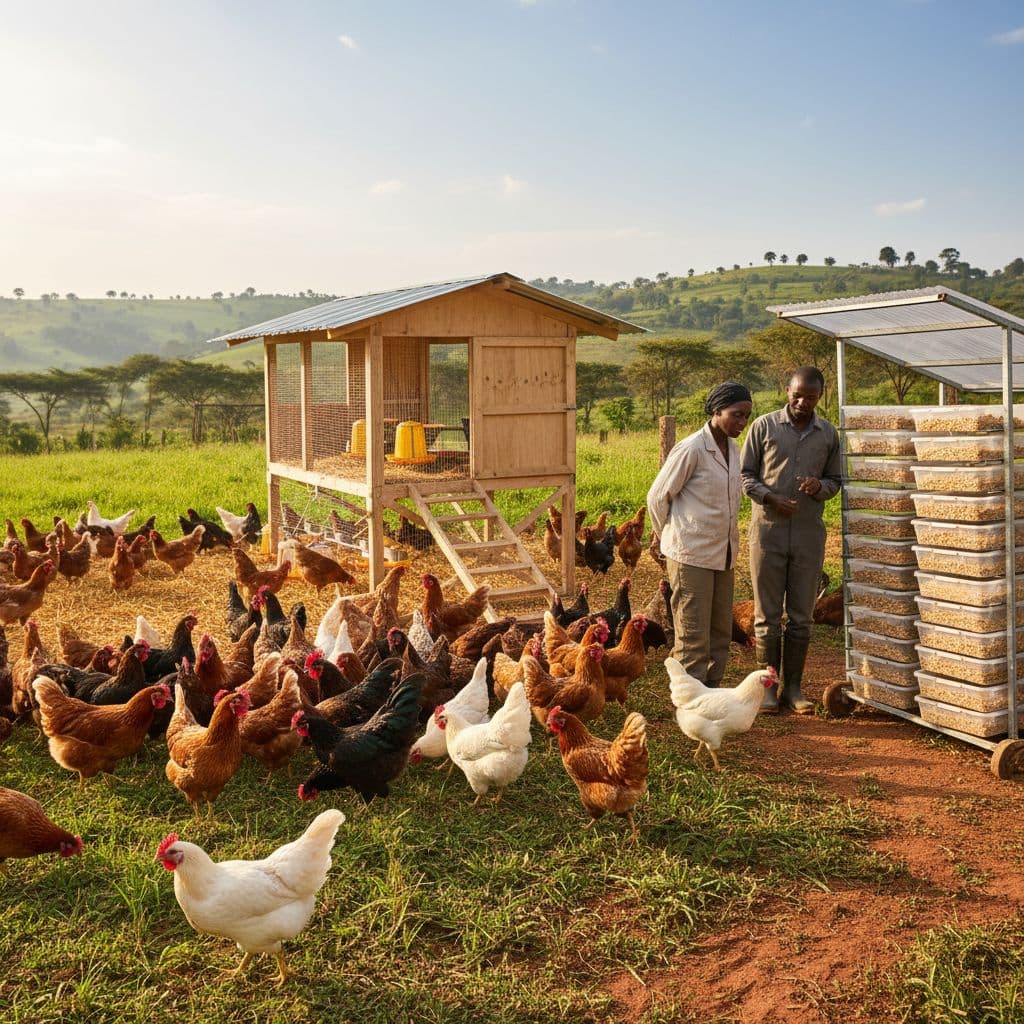
Mealworm farming fits Kenya’s small-scale reality. It uses little space, can be done near the homestead, and turns farm byproducts into something useful. Beyond the birds, the process generates valuable worm castings and vermicompost, which act as high-quality organic fertilizer for an organic farm. In other words, it keeps value circulating on the farm instead of sending more money out to imported ingredients.
That is why the trend has a bigger meaning for the future of feed. Insect farming can support rural income, create room for small businesses, and cut dependence on costly imports. As more farmers learn how to raise and use mealworms well, they may become a regular part of poultry feeding in Kenya, not just a backup option.
[^insect-feed-study]: Socio-economic and environmental implications of replacing conventional poultry feed with insect-based feed in Kenya
Frequently Asked Questions
Can mealworms completely replace commercial chicken feed?
No, mealworms should be used as a protein-rich supplement rather than a complete replacement for your flock’s base ration. While they provide excellent nutritional value, chickens still require a balanced diet of grains, minerals, and clean water to remain healthy.
How much space do I need to start a mealworm colony?
One of the biggest advantages of mealworms is that they require very little space. You can start with a few stacked plastic trays in a clean, dry corner of your home or shed, making them perfect for small-scale backyard setups.
Is it better to feed chickens fresh or dried mealworms?
Both forms are beneficial, but your choice depends on your specific needs. Fresh mealworms are excellent for boosting hydration and providing a live treat, while dried mealworms are easier to store in bulk and mix into daily rations without the risk of spoilage.
Will feeding mealworms to my chickens affect egg taste?
Many farmers observe that adding insects like mealworms to a diet helps produce eggs with richer, yellow yolks. This dietary addition can also contribute to the distinct, savory flavor often associated with kienyeji chickens that consumers prefer.
Conclusion
Kenyan farmers use mealworms for chicken feed because they solve a real problem in a practical way. They are a reliable source of high protein content, affordable to raise locally, and highly beneficial for growth, feather health, and egg production.
That is why mealworms fit so well on small farms. They provide poultry keepers with a local supplement that can reduce the financial pressure of buying costly commercial rations, while still helping birds stay productive and in good condition. By focusing on sustainable poultry farming, producers can improve their bottom line and ensure their flocks receive high quality nutrition.
For farmers who want better feed value without depending entirely on expensive commercial options, mealworms are a smart choice that supports long term success in the Kenyan agricultural sector.