

Adopting mealworms for fish farming Kenya is a strategic move for local producers aiming to slash rising operational expenses while boosting yields. With commercial fish feed costs in Kenya continuing to climb, farmers are increasingly turning to sustainable, insect-based alternatives to maintain profitability in the competitive aquaculture sector.
Mealworms are nutrient-dense insect larvae that provide a powerful protein profile, fitting perfectly into a feeding strategy that prioritizes local supply over expensive imported ingredients. Research across Kenya highlights the broader benefits of insect-based feed, showing it can support job creation, reduce the reliance on scarce maize and fishmeal, and significantly improve farm margins. This guide explores how mealworms can help you reduce costs and build a more reliable, efficient feeding plan for your fish.
Watch a related fish farming video
Key Takeaways
- Cost Reduction: Incorporating mealworms into fish feed allows farmers to reduce their reliance on expensive, imported ingredients like fishmeal and soybean meal, potentially cutting overall feed costs by 30 to 50 percent.
- Nutritional Value: Mealworms offer a high-quality protein profile, healthy lipids, and essential amino acids, which are crucial for the healthy development and growth of tilapia and catfish.
- Sustainable Integration: The practice supports a circular farm economy by using low-value agricultural by-products and kitchen scraps to produce high-value protein.
- Accessible Setup: Small-scale mealworm production requires minimal space and simple, low-cost equipment, making it an ideal strategy for smallholder farmers in Kenya to increase their profitability and control over feed supply.
Why Mealworms for Fish Farming Kenya is a Cost-Effective Solution
Mealworms add real value to fish feed when they are used as part of a balanced mix. They provide a high-quality protein source for growth, fats for energy, and a useful nutritional profile that helps stock stay active and feed well. For farmers who want a local option, these insects represent a significant opportunity for the local aquaculture sector.
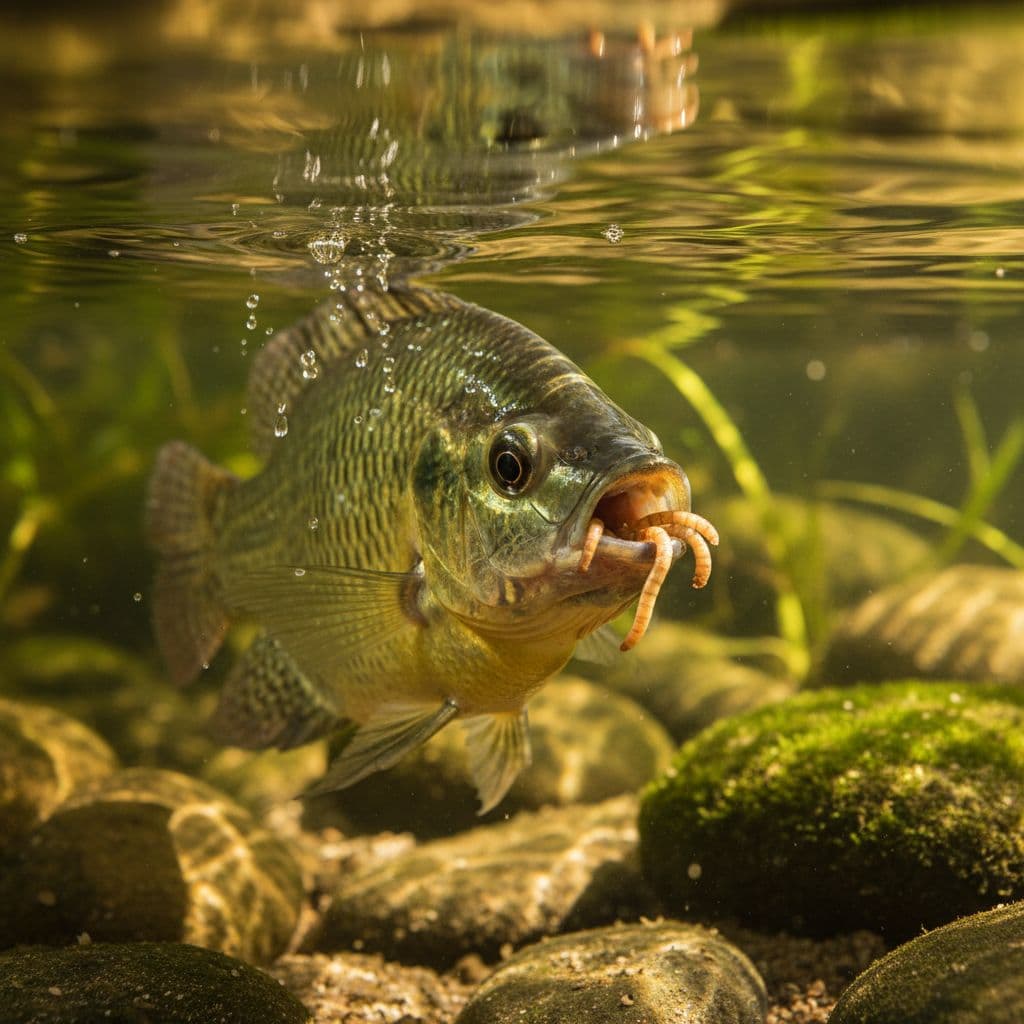
In Kenya, both tilapia and catfish are the primary species that thrive when mealworms are added to their diet. Because tilapia and catfish respond well to natural prey, mealworms offer a familiar and easily digestible nutrition option. By incorporating mealworms into the diet, farmers can significantly improve the growth performance of their fish through an impressive concentration of crude protein, healthy lipid content, and a complete profile of essential amino acids.
Research shows that fish perform well when mealworms replace part of more expensive ingredients. The key is balance. Mealworms work best as a partial ingredient, not the only one in the feed.
### Photo by AI GeneratedWhy fish grow well on mealworm-based feed
Fish need nutrients to build body tissue, and mealworms supply plenty of them. They also contain fats that provide energy, which helps support steady growth and better feed use. In simple terms, mealworms provide the building blocks and fuel necessary for healthy development.
Mealworms fit well into practical feeding plans because they are easy to mix with other ingredients. When used correctly, they improve overall feed quality without making the ration too costly. That is why they make sense for farmers who want strong growth without relying entirely on expensive, imported inputs.
They are a smart fit for small-scale systems too. Mealworms can be produced in limited space, so farmers do not need large land areas to get started. This makes them useful for fish keepers who want more control over what goes into the fish feed.
Mealworms work best as part of a balanced ration, where they support growth without replacing every other ingredient.
How mealworms can cut feed costs for farmers
Feed takes a big share of the budget in fish farming, so even a small drop in cost can improve profit. When farmers grow mealworms themselves, or buy them locally, they can reduce dependence on traditional commercial ingredients like fishmeal and soybean meal. This shift toward fishmeal replacement makes feed planning more stable and less tied to volatile market swings.
For Kenyan farmers, that local supply matters a lot. Imported ingredients often raise costs and squeeze margins, especially for small producers. Mealworms offer a practical way to keep the budget under control while still providing a strong protein source.
Here is where the savings can show up:
- Lower ingredient costs because part of the ration comes from a local source
- Better profit margins because feed is one of the largest farm expenses
- Less pressure on imports since expensive fishmeal and soybean meal can be used less often
- More flexibility for small farms because mealworms can be reared in tight spaces
Recent studies on mealworm inclusion in aquatic diets confirm that fish thrive when these insects replace part of the traditional protein sources. For farmers, this means mealworms help lower costs while maintaining the high nutritional standards necessary for healthy harvests.
How Kenyan farmers can raise mealworms at small scale
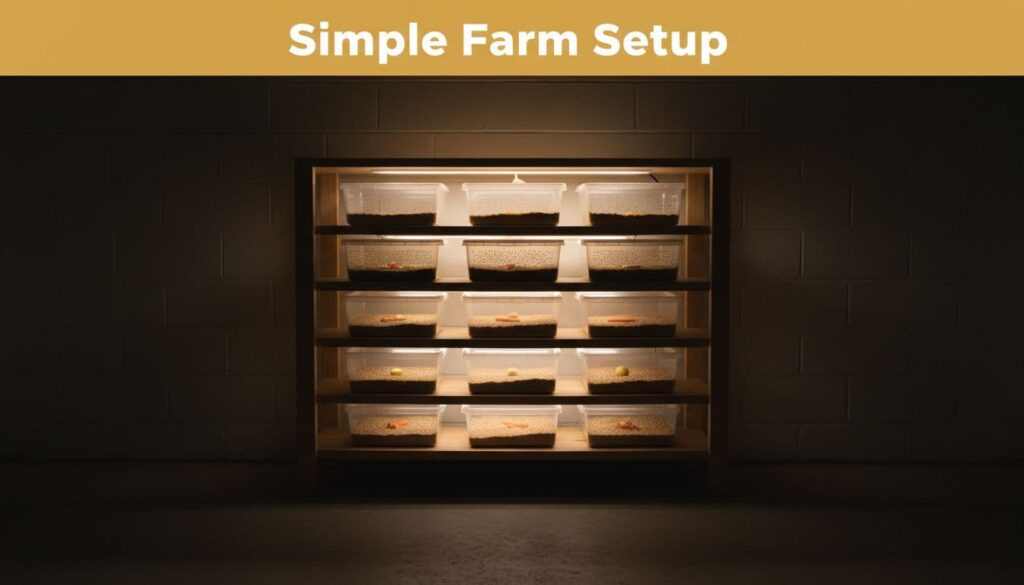
Small-scale mealworm farming does not need expensive equipment or a big building. A few clean containers, a dry feed base, and regular care are enough to start a workable colony of Tenebrio molitor at home or on a small scale farm. This process is an accessible form of insect production for anyone interested in sustainable agriculture.
For farmers looking at mealworms for fish Kenya, the goal is simple: keep the setup cheap, clean, and easy to manage. Mealworms do best when they stay warm, dark, and well ventilated, so the setup should protect them from rain, direct sun, and damp corners that invite mold.
### The low-cost setup you need to begin
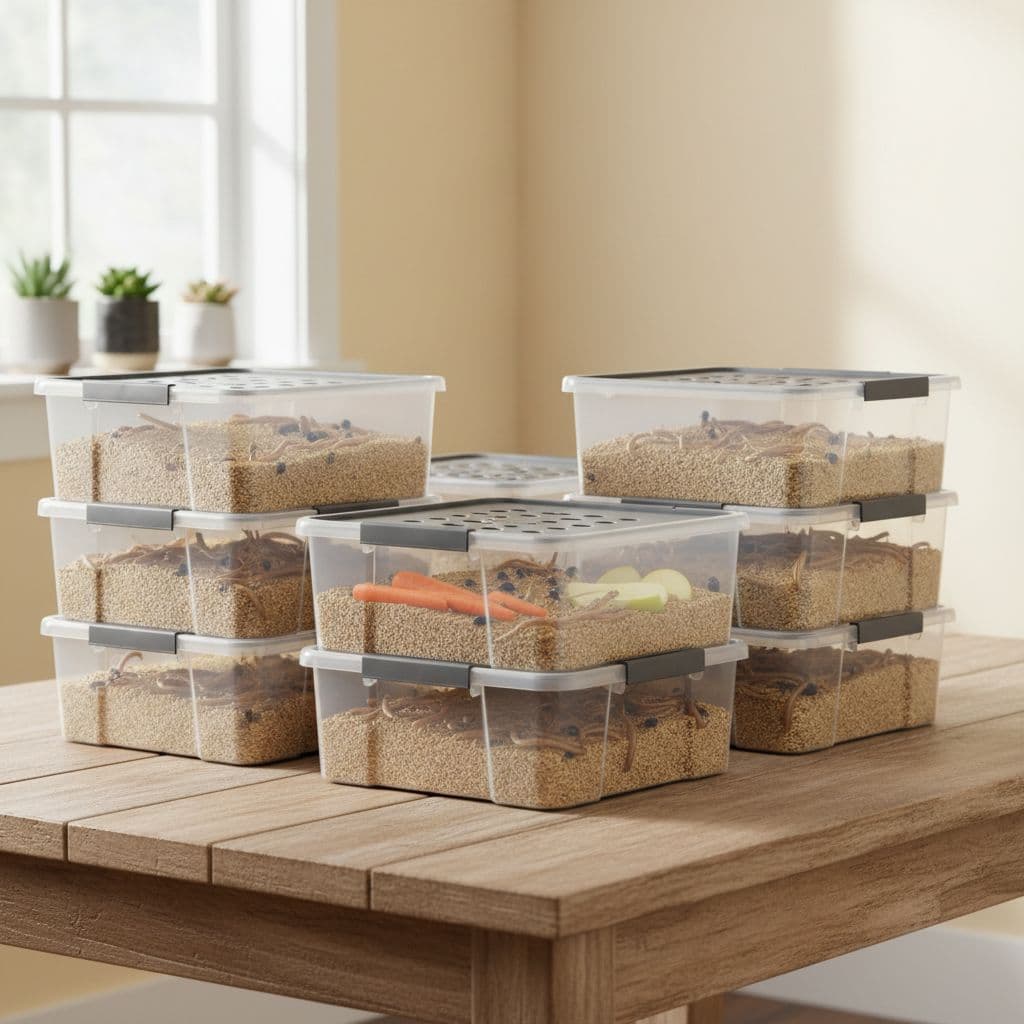
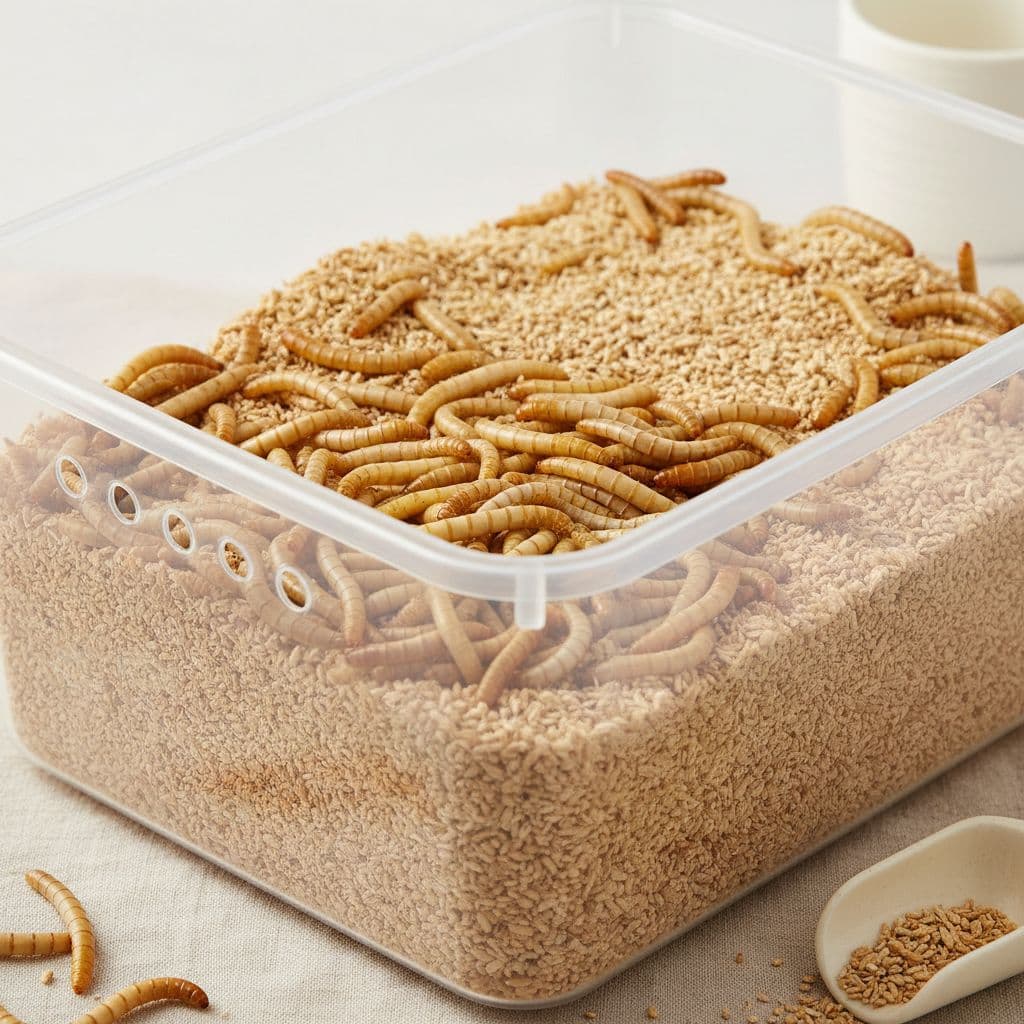
Start with plastic containers or buckets that have smooth sides. Smooth walls help keep the larvae inside, and clear or light-colored bins make it easier to check the colony without handling it too much. If you use lids, punch small holes for airflow so the air stays fresh.
Add a shallow layer of dry bedding such as wheat bran, maize bran, or finely crushed grain by-products. This bedding gives the larvae a place to live and feed. It also helps absorb waste and keeps the bottom of the container from getting wet.
A few simple hiding spots help too. Egg trays, cardboard strips, or small pieces of paper give larvae more surface area and make the bin feel less empty. That matters because crowded, exposed insects are harder to manage and can become stressed. While research shows that some mealworm species can consume certain plastics, helping to potentially mitigate plastic pollution on the farm, it is best to stick to organic agricultural waste for fish feed safety.
Keep the colony in a dry, shaded room with steady temperature. A store room, spare room, or raised shelf in a clean shed works well. Avoid kitchens with smoke, damp floors, or direct sunlight. In many Kenyan homes, a place that stays cool during the day and does not get wet at night is enough.
Keep the setup dry, dark, and airy. Moisture problems destroy more small colonies than poor feed does.
For a beginner setup, one bin is enough. However, many farmers use two or three containers later, because that makes sorting easier. A simple guide like mealworm breeding box systems can help you picture the basics of container setup, but you can begin with materials you already have.
What mealworms eat and how often to feed them
Mealworms eat dry grains and small moist foods. The main feed can be bran, while the moisture can come from tiny pieces of carrot, pumpkin, potato, or apple. This mix works well because the bran gives bulk and the fresh food gives water.
Feed small amounts often. In a small colony, check the bin every few days and add more bran when most of it is gone. Add only a few pieces of moist food at a time, then remove leftovers before they turn soft or dirty. That keeps the bin clean and cuts the risk of mold.
A good rule is to keep the food slightly moist, never wet. Too much water leads to fungus, bad smells, and die-off. Mealworms need moisture, but they do not need a soggy bin. If the vegetable pieces start sweating or breaking down fast, use less next time.
Local farm and kitchen by-products also help. Dry bread crumbs, cracked grain, and leftover cereal meals can work if they stay clean and free from salt or oil. For farmers, that makes mealworm feeding cheap and practical.
How to keep the colony growing
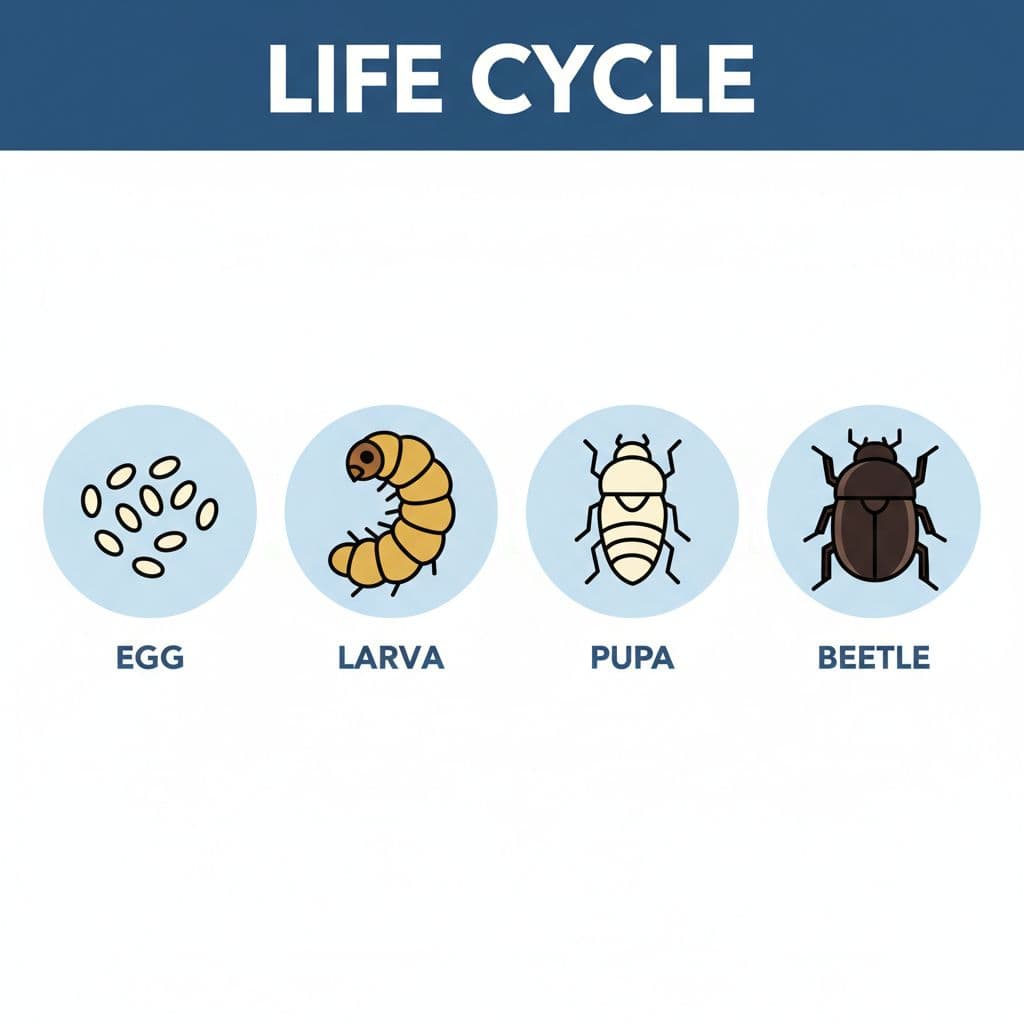
Understanding the life cycle is essential for successful breeding mealworms. The insects progress through distinct stages. First, they are larvae, which are the creatures you feed to your fish. Then they become pupae, and later they turn into the adult darkling beetle. Those beetles lay eggs, and the eggs hatch into new young larvae.
That cycle is the key to steady production. If all stages stay together in one bin, beetles may eat eggs or disturb young larvae. When you separate the stages, the colony keeps producing at a more stable pace.
A simple three-bin system works well:
- Larvae bin for growing the mealworms
- Pupae bin for quiet development into beetles
- Beetle bin for egg laying and new hatchlings
As the larvae get bigger, move the pupae out so they can change safely. Then shift adult darkling beetles into their own bin with bran and a small moisture source. After a while, tiny new larvae appear, and the cycle starts again.
This method gives fish farmers a more regular supply. Instead of waiting for one batch to finish, you keep the colony moving in layers, like a small factory that never fully stops. For small-scale fish feed production, that rhythm matters more than size.
Turning farm waste into useful protein
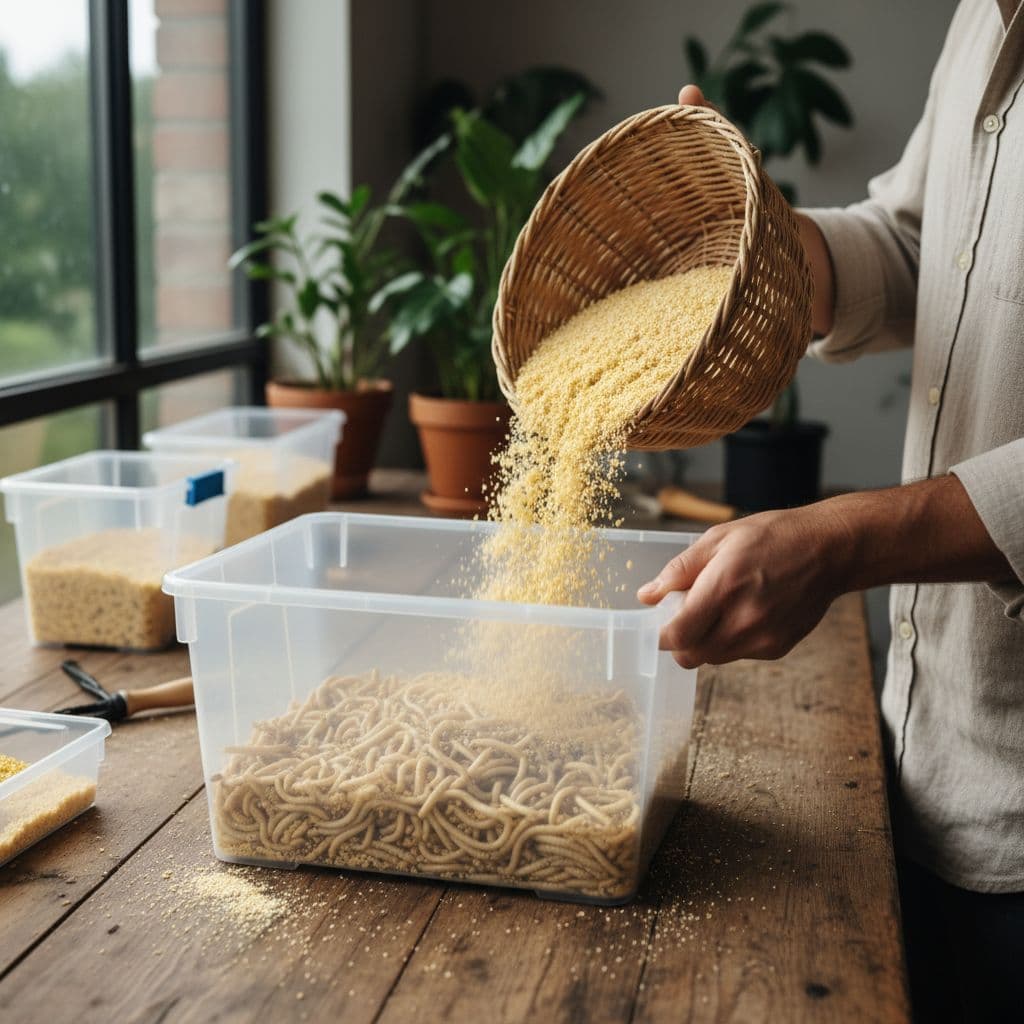
Mealworms fit neatly into a circular farm system because they can turn low-value organic by-products into a high-value feed ingredient. That matters in Kenya, where many farmers already have access to bran, broken grain, and kitchen scraps that would otherwise sit unused or go to waste. When those materials feed insects instead of piling up, the farm keeps more value in the system and buys less from outside.
This approach also makes mealworms for fish Kenya more practical for smallholders. By fostering sustainable farming practices, farmers can rely less on commercial feed and instead use what is already on hand to build a steadier supply of animal protein for fish, poultry, and other livestock.
### Why waste-based feeding matters in Kenya
Bran, crop husks, cracked grain, and clean food scraps can lower the cost of starting a mealworm colony. For a small farmer, that can make the difference between a useful side project and a feed system that feels out of reach. It also reduces pressure on purchased feed materials, which often rise in price faster than farm income.
This is where mealworms make sense for more than one type of farmer. A fish keeper can use them as a protein source, while a chicken farmer or bird keeper can use them as a nutrient-rich feed option too. Because the inputs are local and low-cost, the system stays open to small producers who do not have room for expensive infrastructure.
A simple waste-based setup also helps farmers use what they already produce. That means less waste leaving the farm, less money spent on feed, and more control over supply.
How mealworm farming supports cleaner agriculture
Mealworm production helps farms work with nature instead of against it. Organic by-products become feed, the larvae grow fast, and the resulting insect meal can replace part of the demand for traditional aquafeed components like fishmeal and soymeal. In plain terms, less waste goes out, and more useful food comes back in.
That cycle also eases pressure on land and water. Growing feed crops for animals takes space, irrigation, and transport. By contrast, insect farming can produce high-quality insect meal in a small area with far fewer inputs. Research on sustainable farming practices shows that insects are well suited to bio-convert low-value organic streams into feed and fertilizer, which supports cleaner agriculture and better resource use, as outlined in circular economy research on insect meals.
The cleanest farms often use the simplest loops, one farm output becomes the next farm input.
For Kenyan farmers, that means mealworms can do more than feed fish. They can help build a farm system that is cheaper, tidier, and easier to sustain over time.
What farmers should watch out for before using mealworms
Mealworms can lower feed costs, but they need the same care you would give any farm input. Clean handling, good storage, and careful feeding matter just as much as the mealworms themselves. If you skip those basics, you can end up with mold, waste, or weak fish response.
Farmers should also keep expectations realistic. Mealworms support a feeding plan, but they do not erase every feed challenge at once. Start small, watch the results, and expand only when the colony and the fish are both performing well.
### Keeping mealworms clean and safe
Clean mealworms start with a clean bin. Keep the bedding dry, use fresh feed, and remove spoiled scraps before they turn soft or sour. Damp bedding and rotten food invite mold fast, and once that starts, the whole colony can suffer.
Regular checking makes a big difference. Look for bad smells, clumps of wet feed, dead larvae, or discoloration in the bedding. If you see any of those signs, remove the problem material right away and dry out the container before adding more feed.
Storage matters too. Keep mealworms in a cool, shaded place with airflow, and avoid sealed containers that trap moisture. The goal is simple, a dry colony is a healthier colony.
A few habits help protect the bin:
- Use dry bedding such as bran or other clean grain by-products.
- Add fresh feed in small amounts so leftovers do not spoil.
- Check the colony often for mold, damp spots, or dead insects.
- Remove spoiled materials fast before they spread problems.
If mealworms smell off or look wet, do not feed them out. Poor storage can move the problem straight into your fish system. Furthermore, Kenyan farmers should ensure they follow KEBS guidelines regarding fish feed safety to maintain quality standards for their production. When considering insect meal for your farm, you might also compare mealworms to the black soldier fly, which is another popular option in modern aquaculture.
Using mealworms the smart way in fish diets
Mealworms work best when you blend them with other feeds instead of replacing everything at once. Serving as a partial fishmeal replacement, this strategy makes it easier to protect growth, control cost, and see how your fish respond. A full switch can be too sudden, especially if the fish are used to a different ration.
Start with a small share of the diet, then watch feeding behavior, waste levels, and overall growth performance. If the larvae are eaten well and the fish stay active, you can adjust the mix slowly. If they leave more feed behind or slow down, the ration may need a change.
This step-by-step approach is especially useful for mealworms for fish Kenya because farm conditions vary. Water quality, fish size, and storage conditions all affect results. What works in one pond may need a lighter or heavier mix in another.
Farmers should also remember that mealworms are only one part of a broader feeding plan. The best results come when they sit alongside other good ingredients, not when they carry the whole ration alone. In practice, consistency matters more than bold promises.
A simple feeding check can help:
- Offer a small trial mix.
- Watch how quickly the fish eat it.
- Check water quality after feeding.
- Adjust the share of mealworms slowly.
Healthy mealworm use is careful use. If you treat them like a steady ingredient, not a shortcut, they can support stronger feeding plans without creating new problems.
Why mealworms could help Kenya’s fish sector grow
Mealworms give the fish farming sector in Kenya a local protein option that fits the way small farms actually work. They can be raised close to where feed is needed, they reduce dependence on imported ingredients, and they keep more value in rural communities.
That matters because fish feed is one of the biggest costs in aquaculture. While commercial fish feed can cost upwards of 150 KES per kg, utilizing home-grown larvae as a primary protein source can reduce your total expenditure by 30 to 50 percent, depending on the availability of organic waste. When a farmer can source part of that feed locally, the whole system becomes more stable. Mealworms also fit the broader push toward insect-based feed, where farm by-products turn into useful nutrition instead of becoming a disposal problem.
### More local feed means more local opportunity
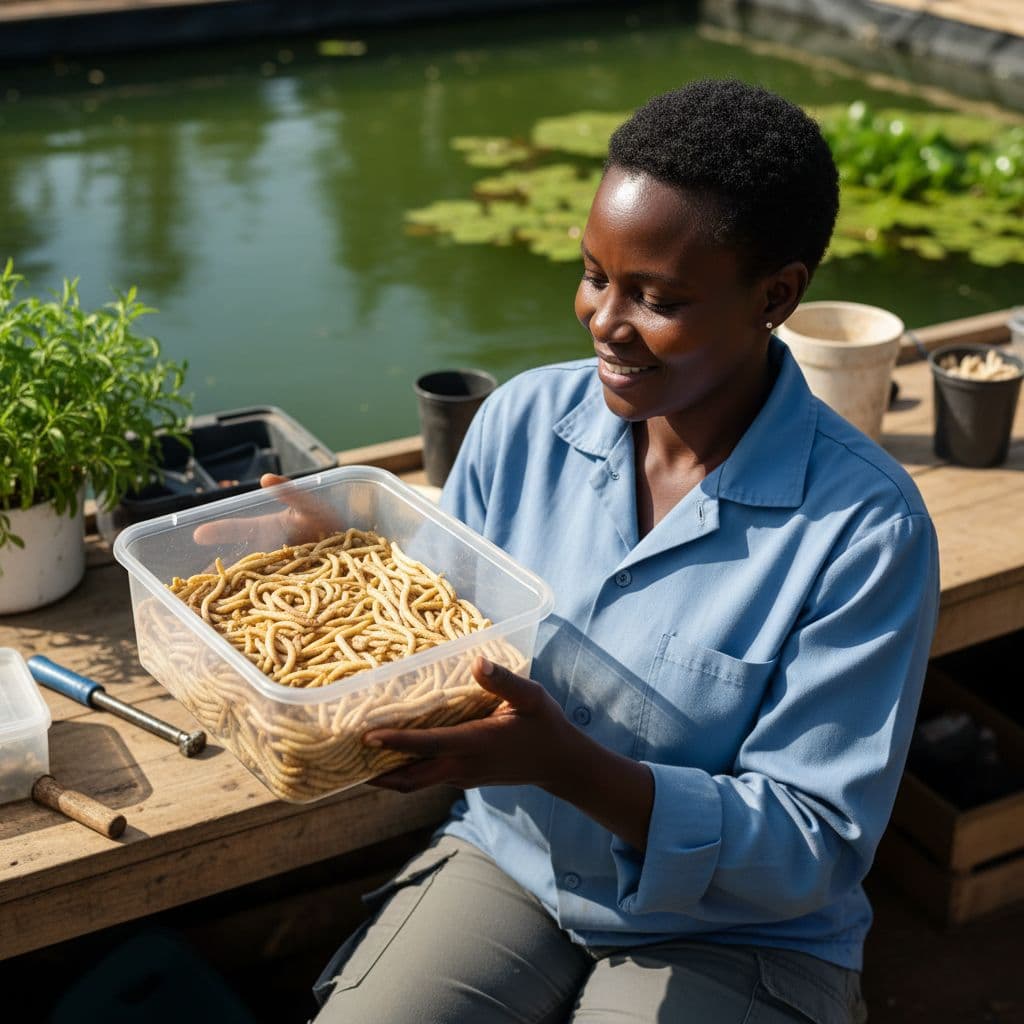
When mealworms are produced locally, the benefits spread beyond the fish pond. Youth can rear insects, dry and process them, move them into feed supply chains, or sell starter stock to nearby farmers. Small businesses can grow around sorting, packaging, transport, and feed mixing, which gives people more ways to earn from the same local market.
This is one reason mealworms for fish in Kenya is more than a feed story. It is also a rural business story. Insect production can be started with modest space and low setup costs, so it serves as a driver for small scale farm profitability, opening the door for young entrepreneurs and household-scale producers who may not have access to large capital.
A local supply chain also means less dependence on distant suppliers. Farmers get shorter lead times, fewer transport costs, and a feed source that is easier to replace or expand when demand rises. For many households, that kind of control matters as much as price.
The wider payoff for food security and incomes
The bigger gain comes from what insect feed can free up. Research linked to insect-based feed shows that using just a partial share of insect meal in animal diets could redirect fish and maize that would otherwise go into feed, enough to support food for hundreds of thousands of people each year. The same work points to thousands of potential jobs, stronger farm incomes, and an economy that could gain millions of dollars, depending on adoption levels.
That does not mean every farm will see the same result. It does mean the direction is clear, more local feed can ease pressure on fishmeal and maize, keep more food available for people, and improve the economics of aquaculture. A stronger fish farming sector also helps rural families earn more from ponds, hatcheries, trading, and feed supply.
The real value is not just cheaper feed. It is a tighter local system where farmers, workers, and consumers all keep more of the benefit.
For a broader look at how insect feed supports farm jobs and incomes, see IDRC’s work on insects in fish feed and smallholder tilapia studies in Kenya.
Frequently Asked Questions
Can mealworms replace all commercial fish feed?
No, mealworms should be used as a partial ingredient rather than a complete replacement for all commercial feed. They perform best when blended into a balanced ration to ensure your fish receive a complete range of nutrients.
What are the main risks when farming mealworms?
The biggest risks are moisture-related issues, such as mold and fungus, which can quickly ruin a colony. Farmers should keep their setups dry, provide adequate ventilation, and remove any leftover moist food before it begins to decay.
How much space do I need to start raising mealworms?
Very little space is required, as mealworms can be cultivated in simple, stacked plastic bins. A small room, shed, or even a protected, shaded shelf is often sufficient to manage a colony for small-scale fish farming.
What should I feed the mealworms?
Mealworms thrive on dry, organic substrates like wheat or maize bran. You can provide hydration by adding small, controlled amounts of vegetable scraps like carrots or potatoes, but always remove any uneaten pieces to prevent rot.
Are mealworms safe for all types of fish?
Mealworms are particularly effective for species like tilapia and catfish that respond well to natural prey. While they are a safe and nutritious supplement, you should always monitor your fish’s response and maintain proper water quality when introducing any new feed ingredient.
Conclusion
Adopting mealworms for fish feed in Kenya makes sense because they provide farmers with a local, sustainable source of protein, reduce pressure on costly inputs, and fit well into small-scale systems. They also support a cleaner farm loop, since low-value by-products are transformed into useful components for your aquafeed instead of becoming waste.
While mealworms are not a magic fix and should not replace every part of a traditional ration, they remain a strong option for producers who want lower costs, better nutrition, and a more stable feeding plan. Ultimately, integrating mealworms for fish farming Kenya offers a reliable long-term solution to improve fish farming stability across the country.
Start small, learn the life cycle of these larvae, and test them as a vital protein source in your feed mix before scaling up. For Kenyan fish farmers, that practical, hands-on approach is where the real value begins.