

Rising feed costs in Kenya are placing significant pressure on poultry farmers, bird enthusiasts, and reptile keepers alike. Live mealworms Kenya offer a practical, high-quality source of protein that can easily integrate into your existing care routine without requiring significant space.
Mealworms, scientifically known as Tenebrio molitor, are the larvae of darkling beetles. They are widely popular because they are easy to handle, rich in essential nutrients, and highly effective as a supplement feed. Poultry keepers use them to support healthy growth, feather development, and consistent egg laying, while bird enthusiasts and reptile owners appreciate them because many animals find their natural movement highly stimulating. These larvae also add necessary variety to daily meals, which helps keep your animals active and engaged during feeding time.
Mealworms should support a balanced diet, not replace it.
In this guide, you will learn why these insects are a smart choice, how they fit into your specific animal care routine, and exactly what to look for when shopping for a sustainable protein source.
Key Takeaways
- Effective Protein Supplement: Live mealworms are a high-quality, protein-rich treat for poultry, birds, and reptiles that support growth and health when added to a balanced, main diet.
- Space-Efficient Farming: Mealworms can be produced easily in Kenya within small indoor spaces using low-cost containers and common grain-based bedding like bran or oats.
- Sustainability Benefits: Beyond animal nutrition, mealworm colonies are environmentally beneficial, as they can serve as a circular waste solution and possess unique enzymes capable of degrading plastic.
- Quality Management: Ensuring mealworm health requires maintaining dry conditions, providing proper ventilation, and avoiding overfeeding moisture sources, which prevents mold and keeps the colony thriving.
What live mealworms offer for chickens, birds, and reptiles
Live mealworms give animal keepers a simple way to add more interest and nutrition to feeding time. They are small, easy to offer, and highly attractive to many species that like moving prey or a protein-rich snack. Used the right way, they can support health, behavior, and appetite across poultry, wild birds, and reptiles.
### Why Kienyeji chickens enjoy them as a Protein source
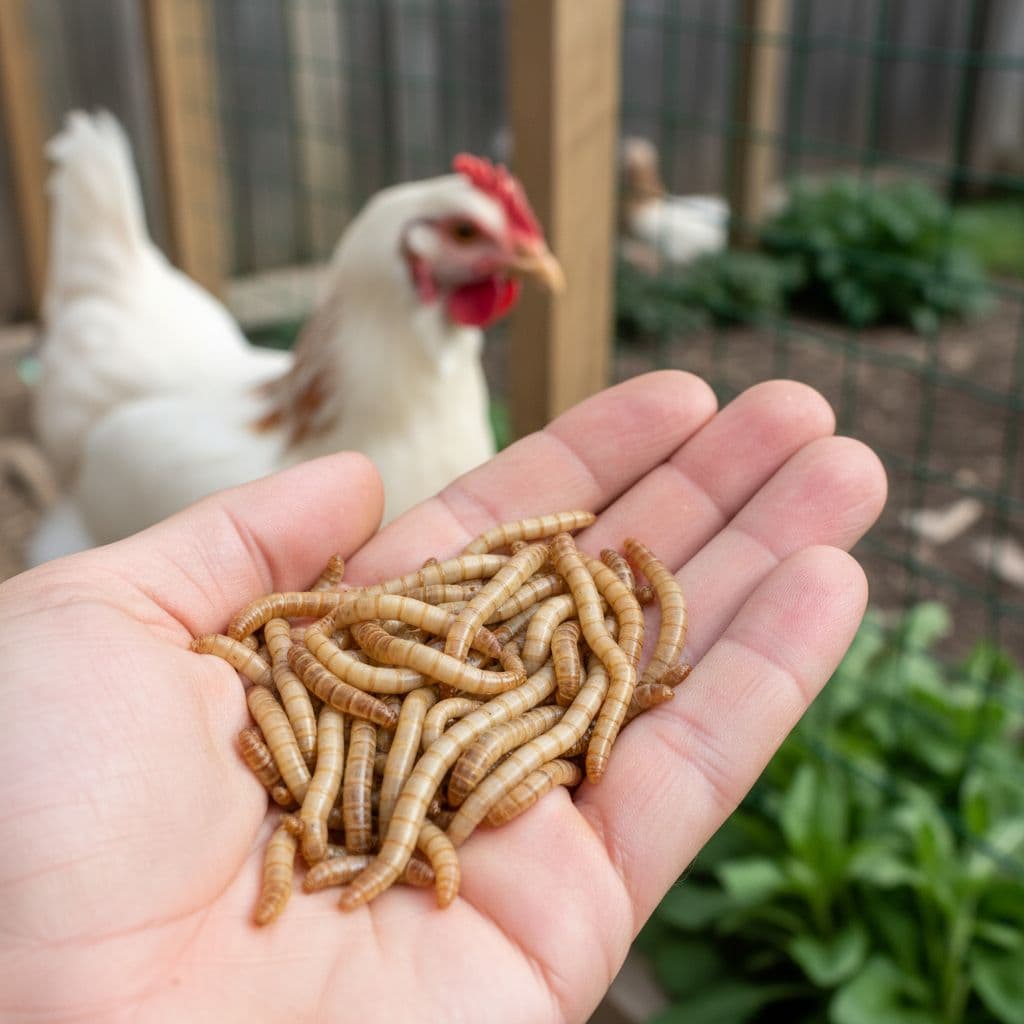
Kienyeji chickens usually take to live mealworms fast because they are active, soft-bodied, and easy to peck up. That makes them a useful treat during growth, feather change, and other high-demand periods when Kienyeji chickens need extra protein. While black soldier fly larvae are another popular high-protein insect alternative in the region, mealworms remain a favorite for their ease of handling.
A small handful can also help keep hens busy. Chickens love to scratch, search, and peck, so mealworms can turn feeding into a natural activity instead of a flat bowl of feed. That extra movement matters because bored birds are often less active and harder to manage.
Live mealworms can also fit into a laying flock’s routine. The extra protein and fat may support general condition, and many keepers use them as a simple way to reward birds that are laying well or recovering after stress. Still, they should stay in the role of a supplement, not the main diet.
Mealworms work best as a boost, while a complete poultry feed still does the heavy lifting.
For backyard keepers, that balance is the key. Mealworms add value, but grains, pellets, greens, and clean water still matter most.
How mealworms fit into bird feeding and reptile diets
Wild birds and pet birds often respond well to live mealworms because they are easy to recognize as food and quick to eat. As a staple for reptile and bird food, they offer essential nutrients. Many insect-loving birds, especially during nesting or chick-rearing, need more protein than seeds alone can provide. A live mealworm can be a small but useful protein boost, especially when birds are active and feeding young.
Pet birds may also enjoy them as an occasional treat. The movement gives them something engaging to watch and catch, which can make feeding time more stimulating. If you care for wild birds, mealworms can be part of a feeder routine that brings in more variety.
Reptiles such as geckos and bearded dragons also benefit from feeder insects like mealworms when they fit the species and size. Many reptiles prefer prey that moves, and mealworms trigger that instinct well. That said, portion size matters. Small reptiles need smaller servings, while larger animals can handle more, always within a varied diet.
Why many Kenya-based keepers like them as a local protein source
For keepers in Kenya, live mealworms make sense because they can be produced in a small space with modest water needs. That matters for anyone working with limited room, from backyard poultry owners to small-scale animal keepers. A compact protein source is easier to manage than bulky animal feed storage.
They also support a more local feeding routine. Instead of relying only on costly commercial protein, keepers can add a feed option that can be raised close to home. That can reduce dependence on imported or long-supply-chain inputs, while keeping more control in the hands of the keeper.
Mealworm production also fits well with a sustainability mindset. Researchers at icipe have highlighted insect farming as part of a broader circular approach, where insects support food systems and waste can be put to better use. For smallholders, that idea feels practical, not abstract. It means getting useful protein from a system that takes little land and can be managed at home or on a small farm.
For many people, that mix of local supply, small footprint, and simple handling is the real value. It gives them another tool for feeding animals well without making the setup complicated.
In Kenya, you can find live mealworms Kenya through local poultry and reptile supply shops, as well as via specialized insect farmers advertising on social media platforms like Facebook or WhatsApp community groups. Many small-scale agri-tech farms and hatcheries across the country now produce and distribute live cultures, making it easy to source fresh stock directly from local breeders.
In Kenya, there are currently no specific restrictive legal requirements for small-scale, non-commercial insect farming meant for personal livestock or pet use. However, if you plan to operate a large-scale commercial insect rearing business, it is best to check with local agricultural authorities or the Kenya Bureau of Standards (KEBS) for updated guidelines on animal feed production and biosecurity protocols.
How to choose healthy live mealworms before you buy
Buying mealworms is easier when you know what healthy stock looks like. A good batch should be active, clean, and dry, with no signs of spoilage. That matters whether you are feeding poultry, pet birds, or reptiles, because poor-quality worms can waste money and may upset sensitive animals. As a high-quality food source, healthy worms provide the essential protein your animals need to thrive.
For first-time buyers in Kenya, the safest approach is simple: check the worms, check the bedding, and check the container. If the batch looks fresh at a glance, it usually performs better after you bring it home. Ideally, you should also look for a supplier that offers a live arrival guarantee to protect your investment during transit.
### Signs that the mealworms are active and fresh
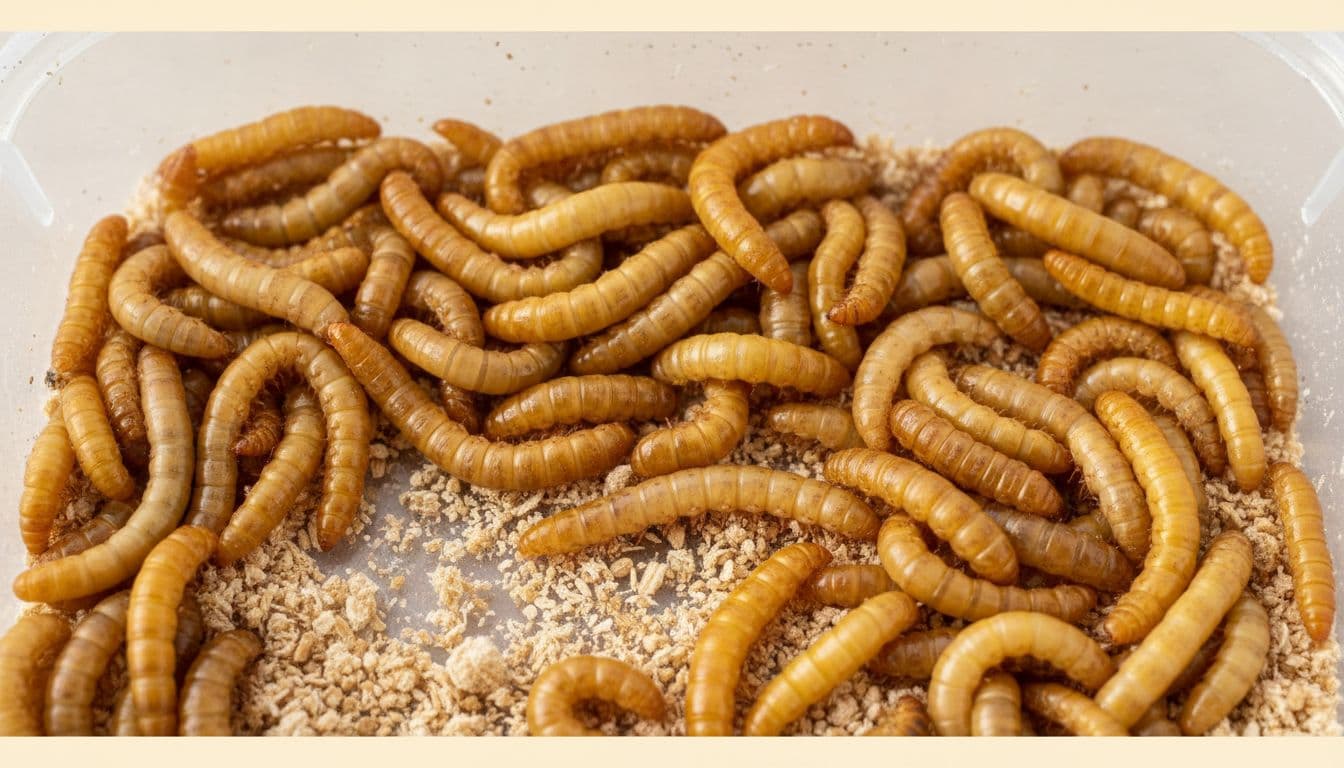
Healthy mealworms move with purpose. They should wriggle, crawl, and respond when the container shifts or opens. Their bodies should look firm and full, not thin, limp, or shriveled. Because they are nutrient dense, these energetic larvae provide the best value for your livestock.
Color also helps. Fresh mealworms are usually light yellow to golden, with a clean look across the batch. The bedding should stay dry and loose, and the container should smell neutral or slightly earthy, not sour or rotten.
That kind of freshness matters because active mealworms are more appealing to chickens, birds, and reptiles. They also tend to store and transport better, which makes them a better choice if you plan to feed them soon or breed them later.
A quick visual check can tell you a lot:
- Movement should be steady, not weak or delayed.
- Body shape should look plump and even.
- Bedding should be dry, not clumped.
- Smell should be clean, not sharp or bad.
Red flags that mean you should walk away
Some batches look cheap because they are already going bad. If you see mold, wet bedding, or dead insects mixed in with the worms, leave them alone. Excess moisture is a common problem, and it can lead to spoilage fast.
A foul smell is another warning sign. Healthy mealworms should not stink. If the container smells sour, ammonia-like, or rotten, the batch may have been stored badly or left too long in heat.
Watch for pests too. Mites, flies, and other tiny invaders often show up when a container is dirty or damp. You should also avoid worms that look dark, damaged, or stuck together in wet clumps.
Wet or spoiled mealworms can cause trouble for poultry and pets, especially when they are fed in small enclosures or mixed with other feed.
If you want a second reference point, LIVEFOODS DIRECT’s mealworm feeding guide describes the same basics: active movement, clean containers, and minimal dead worms. Those are the signs that usually separate a fresh batch from a risky one.
Picking the right quantity for your flock or pets
Start with a modest batch. That gives you room to test quality, watch how your animals respond, and avoid waste if the worms are fresher than expected but still small in number.
If you keep chickens, buy enough for a short feeding period, not a long shelf life you may struggle to manage. While mealworms are hardy, their lifespan during transit in Kenya’s heat is best managed by choosing suppliers who offer quick shipping and proper bedding. For pets like birds or reptiles, small batches often make more sense because you can use them quickly and keep the rest of the diet balanced.
Beginners often do better with a size they can handle easily. A smaller order is also useful if you want to breed from the same stock, because it lets you learn how the worms behave before you scale up.
A simple rule helps here:
- Buy only what you can use soon.
- Match the amount to your current flock or pet needs.
- Leave room for a trial batch if this is your first order.
That approach keeps your feeding routine practical. It also makes it easier to judge whether the supplier is giving you consistent, healthy live mealworms in Kenya.
Setting up an Insect breeding container for Live mealworms Kenya
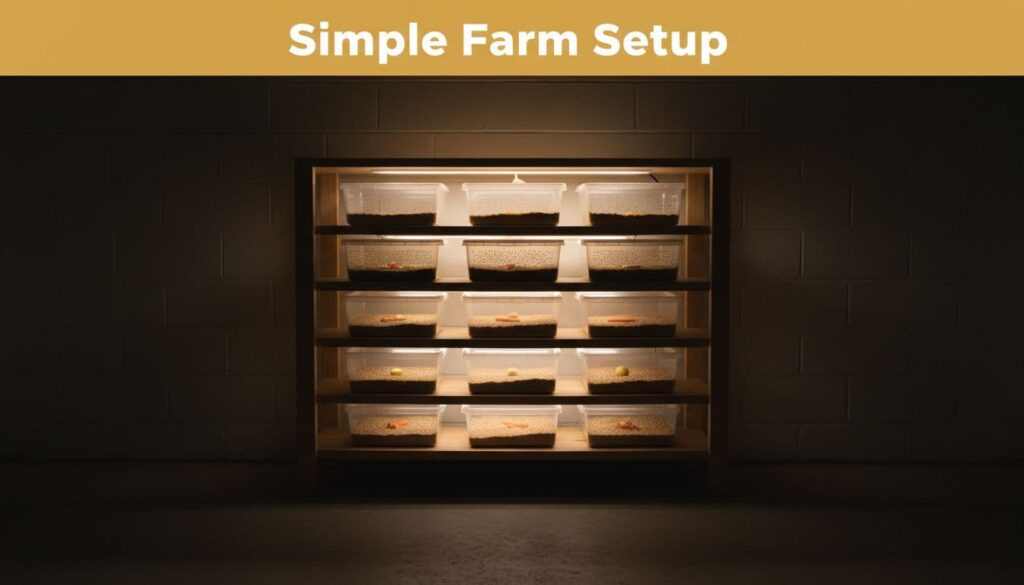
A home mealworm setup does not need to be fancy. In fact, the best setups are usually the ones that stay dry, clean, and easy to check every few days. If you keep chickens, birds, or reptiles, a small container system can give you a steady supply without taking over your space.
The goal is simple: give the worms a safe bin, dry substrate for mealworms, a little food, and stable conditions. Once you get that right, mealworms are easy to manage in a Kenyan home, especially if you have a spare shelf, store room, or shaded indoor corner.
### Containers, bedding, and hiding spots that work well
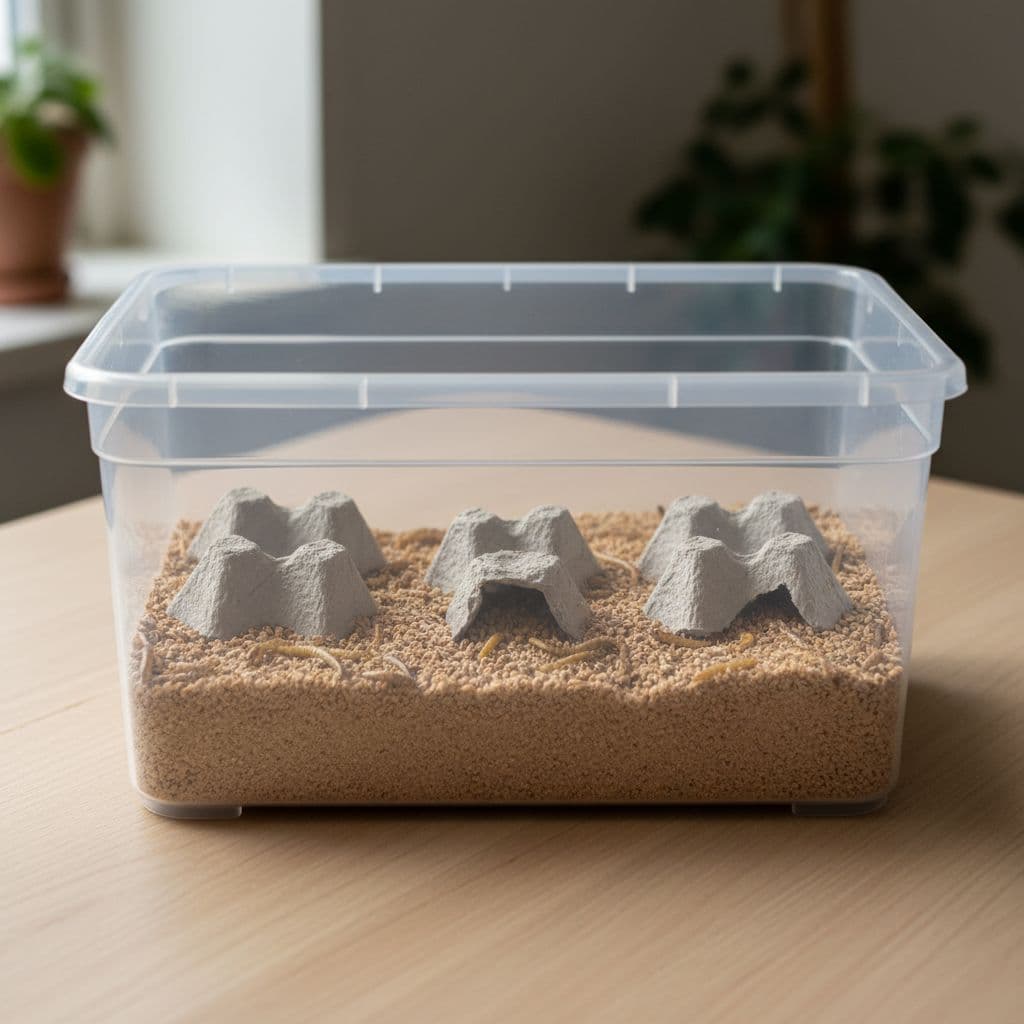
A plastic tub, drawer unit, or shallow storage box works well as an insect breeding container. Choose something smooth on the inside so the worms cannot climb out easily. Ventilation is crucial; air holes in the lid help, but a fine mesh lid is even better because it allows airflow while still protecting the insects.
For substrate for mealworms, use a dry grain base such as bran or oats. This gives the worms a place to live and a little food at the same time. Keep the layer loose and dry, not packed down like soil.
Cardboard pieces make the setup much better. Egg trays, toilet paper rolls, or torn cardboard give the worms places to hide and crawl through, which helps reduce crowding. They also make the bin feel less bare, and that can improve survival when the colony grows.
A simple setup often looks like this:
- An insect breeding container (vented plastic tub or drawer)
- Dry bran or oats on the bottom
- Egg trays or cardboard strips for cover
- A lid that keeps pests out but still allows air in
Dry substrate is the foundation. If it feels damp, the bin is already on the wrong track.
The best food and moisture sources to use
Mealworms do well on dry grains, so start with what you already have in the kitchen. Wheat bran and oats are common choices, and maize meal can also work in small home setups. These foods keep the bin simple and cheap, which matters when you are managing live mealworms in Kenya on a budget.
For moisture, add small pieces of potato, carrot, or apple. Use only a little at a time, then remove leftovers before they soften or rot. That small step gives the worms the moisture they need without soaking the substrate.
Never pour water into the container. Too much wetness can kill mealworms and invite mold fast. A damp bin turns from useful to messy very quickly, especially in warm rooms. If you see clumps, smell sour odors, or spot fuzzy growth, the bin needs cleaning right away.
A simple feeding routine works best:
- Add dry substrate and grain first.
- Place a few thin slices of carrot, potato, or apple on top.
- Check the bin after a day or two.
- Remove any soft or moldy food before adding more.
Where to keep them in Kenya’s climate
Mealworms do best in a warm, dry, dark place with steady room temperature. When considering temperature and humidity, a shaded shelf indoors, a clean store room, or a quiet cupboard with airflow can work well. They should stay out of direct sun, and they should never sit where rain or splashing water can reach them.
Kenya’s weather can help or hurt depending on where you live. Warm rooms support growth, but very hot spots can dry the bedding too fast. Very damp areas are a problem because they raise the chance of mold and mites.
The sweet spot is a calm indoor space with stable conditions. A thermometer helps, and a humidity meter is useful if you want tighter control. Mealworms usually do well around normal room warmth, so you do not need special equipment to get started.
Keep these basic rules in mind:
- Avoid windows with harsh afternoon sun
- Keep the bin away from laundry areas and wet floors
- Do not store it in a bathroom or other damp space
- Check the bedding often so it stays dry and loose
With that kind of setup, mealworm keeping stays simple. You get a clean, low-cost source of feed, and the colony is easier to maintain week after week.
When properly maintained in a dry, ventilated container, live mealworms can survive for several weeks or even months during transport and storage. Their longevity largely depends on avoiding excess moisture, as wet conditions quickly lead to spoilage and death. To ensure they stay alive throughout the process, keep the transport bin dry, cool, and filled with a fresh grain-based bedding.
Breeding mealworms so your supply keeps growing
A small starter batch can become a steady feed source if you manage the colony in stages. Mealworm farming is quite rewarding because the process is simple: let the larvae grow, protect the eggs, and move the beetles before they disturb the next generation.
That rhythm keeps the colony productive without much space. It also makes live mealworms in Kenya easier to maintain for chickens, pet birds, and reptiles, because you are always feeding one group while another is growing behind the scenes. While this guide focuses on the common Tenebrio molitor, some keepers also look into lesser mealworms for variety in their insect protein sources.
### The mealworm life cycle in plain language
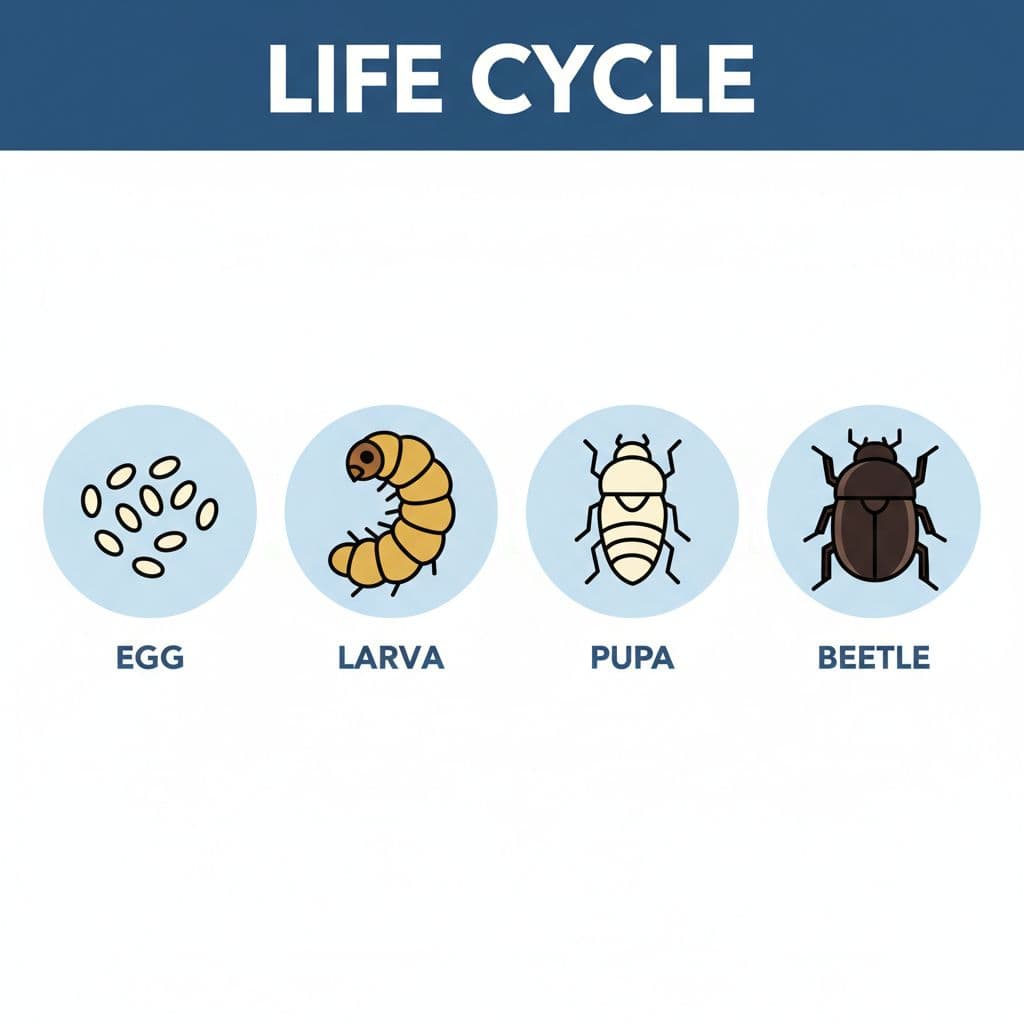
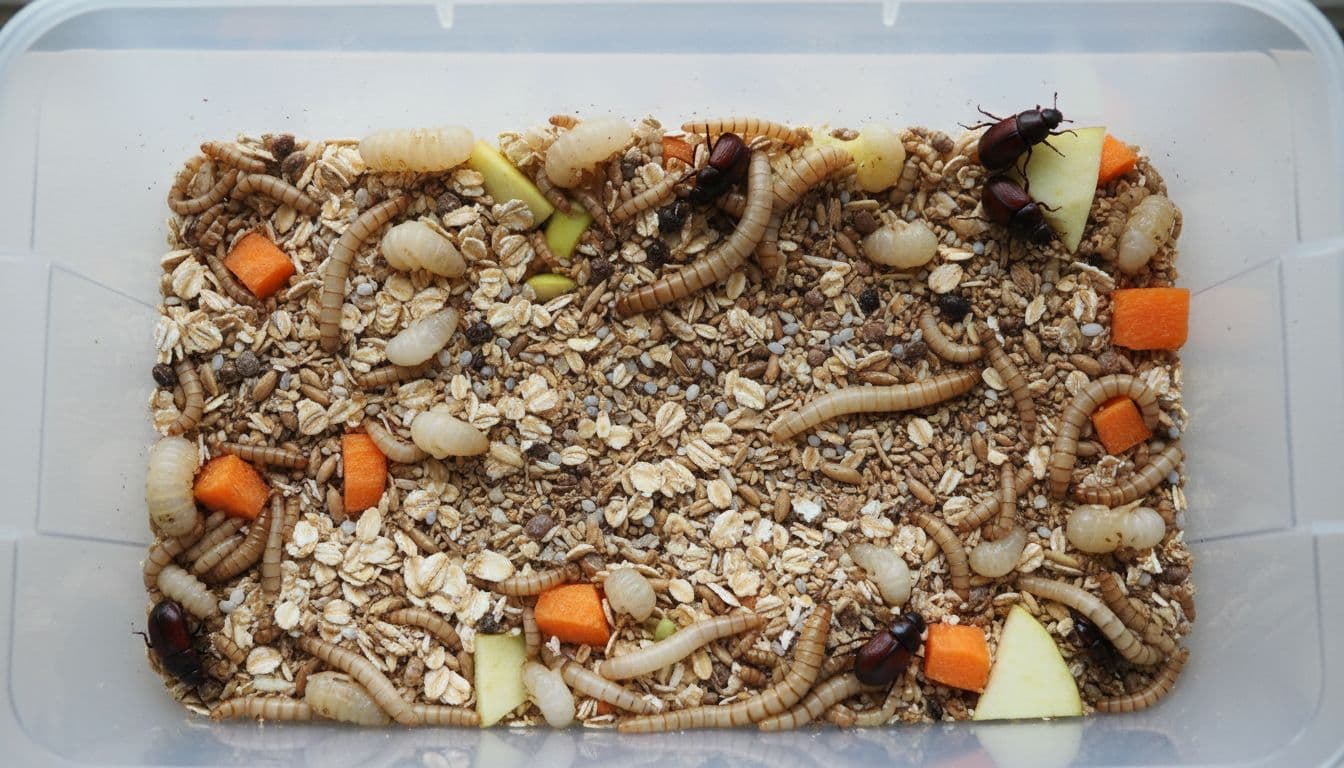
Mealworms move through four simple stages: egg, larva, pupa, and beetle. Adult beetles lay tiny eggs in the bedding. After that, the eggs hatch into small larvae, which are the mealworms most people buy and feed.
The larval stage is the growing stage. This is when the worms eat, shed their skin, and get bigger. After a while, a larva stops eating and turns into a pupa, which looks pale, curled up, and almost still. It then changes into an adult beetle, and the cycle starts again.
Each stage matters because breeding depends on timing. Larvae give you feed, pupae become beetles, and beetles produce the next round of eggs. If you keep all three stages healthy, your supply keeps renewing itself instead of running out. An added bonus of mealworm farming is the waste produced by the colony, known as frass, which serves as a high quality organic fertilizer for your garden.
The growing worms feed your animals, while the beetles keep the colony going.
For a simple visual guide to the cycle, BTO’s mealworm notes explain the basic stages and the conditions they need.
How to separate beetles, eggs, and young worms
Once beetles appear, move them into a fresh container with clean bedding. That gives them a place to lay eggs without trampling young larvae or eating the soft eggs before they hatch. It also makes it easier to collect the next generation later.
Many beginners find that purchasing a dedicated breeder kit is the easiest way to start this process. A good system uses one container for growing larvae and another for breeding beetles. The beetles stay in the breeding box, the eggs stay safe in the bedding, and the tiny larvae get time to grow before you sort them again. That separation is what turns a small batch into a repeat supply.
You do not need a complicated setup. A second plastic tub, dry bran, and a few pieces of cardboard can do the job. Check the breeding box often, because the eggs and tiny worms are easy to miss at first.
A simple routine helps:
- Move mature beetles into a fresh bin.
- Leave dry bedding and a little food in the bin.
- Check for tiny larvae after the eggs hatch.
- Transfer older larvae to the feeding bin and keep the cycle moving.
This is the step that keeps the farm productive. If beetles stay too long with growing larvae, the colony gets crowded and production slows.
Common mistakes that slow down breeding
Most breeding problems come from care that is too wet, too dirty, or too crowded. Mealworms need dry bedding, so overfeeding with moist scraps can quickly lead to mold. A little carrot or potato is enough for moisture, and leftovers should come out before they soften.
Dirty bedding also causes trouble. As waste builds up, the container starts to smell and the worms lose quality. Fresh bran or oats, plus regular cleaning, keeps the colony active and easier to manage.
Poor airflow slows things down too. If the container traps heat and dampness, the bedding clumps and pests show up faster. A vented lid or fine mesh top helps a lot, especially in warm rooms.
Another common mistake is mixing every life stage in one box for too long. Beetles, eggs, and young larvae each need their own space at the right time. If you let them stay mixed, the younger stages have a lower chance of surviving.
A few habits make breeding much easier:
- Keep the bedding dry and loose.
- Remove soft food before it rots.
- Use a lid that allows airflow.
- Separate beetles before the box gets crowded.
When the colony is clean and organized, growth is steadier. That means fewer losses, more worms, and a better return from every starter batch.
For a broader look at home breeding setup basics, this mealworm breeding guide shows how a simple container system can keep production going with very little daily work.
Feeding live mealworms safely and in the right amounts
Live mealworms work best as an all-natural supplement, not a staple. That matters for chickens, birds, and reptiles, because they still need a balanced diet every day. Keep the main feed steady, and use mealworms the way you would use a healthy topping on a meal; they are useful, but they should not make up the whole plate.
### How often to feed chickens and other animals
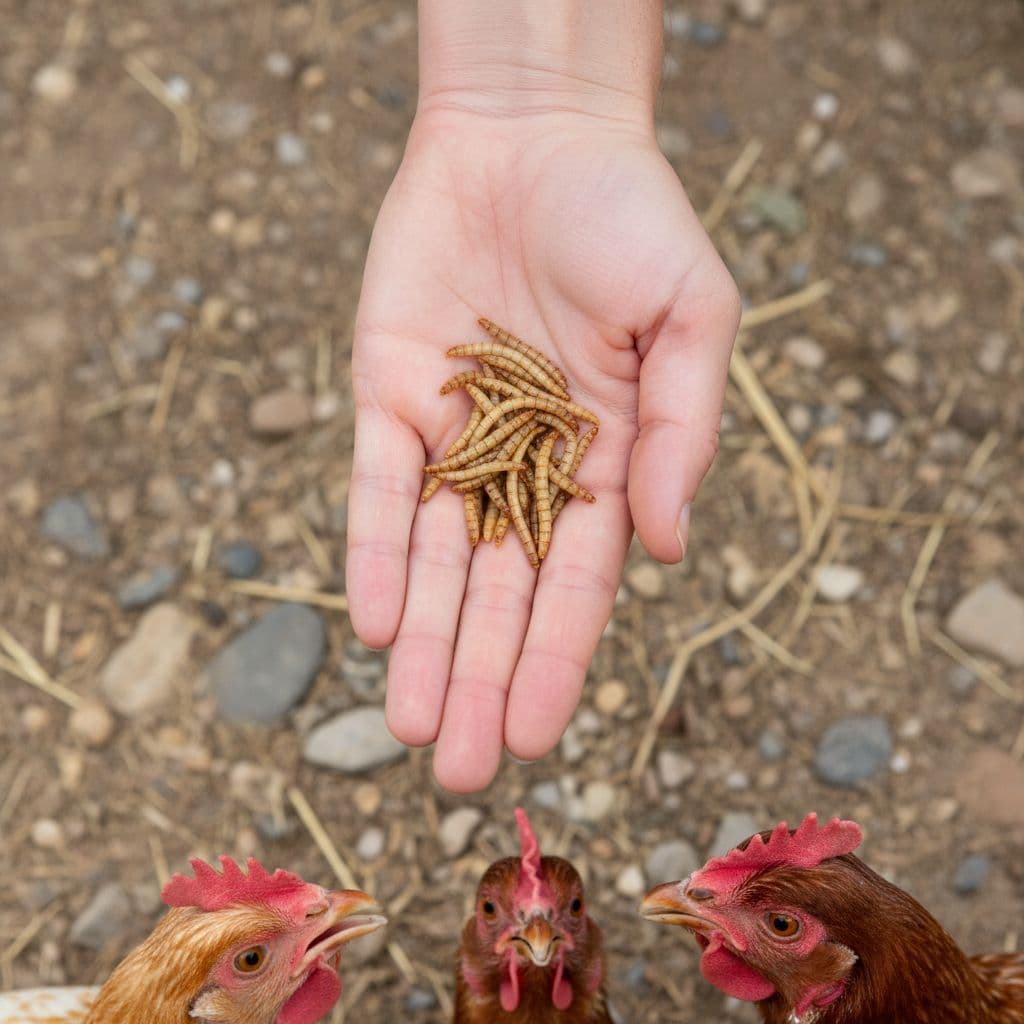
For chickens, a few mealworms a couple of times a week is usually enough for most backyard flocks. They work well as a treat during training, after a hard molt, or when you want to encourage shy birds to come closer. Even then, the birds still need complete poultry feed, plus clean water every day.
Many owners choose live worms over dried mealworms because live options provide better hydration and enrichment for the flock. Bird keepers can use mealworms in a similar way, offering them in small amounts so the birds stay interested. Reptile keepers should also use mealworms as part of a varied feeding plan, incorporating other feeder insects, greens, and supplements to ensure their pets thrive.
A simple feeding habit keeps things in balance:
- Chickens can get a small handful, not a full meal.
- Pet birds should get only a few worms at a time.
- Reptiles should receive portions based on size and species needs.
When you buy live mealworms to enhance your poultry feed, the goal is to support the diet, not replace it. That small shift in mindset prevents most feeding mistakes.
Why too many mealworms can be a problem
Mealworms are rich in fat, but they require a careful balance of calcium and protein to ensure long-term health. If chickens eat too many, they may fill up on treats and consume less of the balanced ration that provides essential nutrients. That can affect shell quality, body condition, and overall flock health.
This matters even more for laying hens. They need consistent calcium to keep producing strong eggshells, and mealworms do not provide that in the right amount. For reptiles, the same problem can occur, which is why experts often suggest using gut-loaded mealworms. By feeding the worms nutrient-dense vegetables before offering them to your pet, you significantly improve the nutritional value of the meal.
Too many mealworms can crowd out the foods your animals actually need.
A good rule is to treat them like dessert, not dinner. If the animals start ignoring their regular feed, the portion is too large. Unlike dried mealworms, which are often used as a shelf-stable alternative, live insects encourage natural foraging behavior and hydration.
Easy serving ideas for birds and reptiles
Small portions work best because they are easy to control and less likely to upset the diet. For chickens, scatter a few live mealworms on clean ground or in a shallow tray so they peck naturally without overeating. For pet birds, hand-feeding a few worms can build trust and provide a healthy snack.
Reptiles need more care with portion size. Smaller species should get fewer worms, while larger animals can handle more, but only within their normal feeding plan. If your reptile eats insects often, vary the selection so mealworms do not become the only option in their diet.
A few simple serving habits help a lot:
- Offer a small amount first, then watch how quickly it disappears.
- Adjust for body size, age, and appetite.
- Remove leftovers so they do not crawl away or spoil the enclosure.
For species-specific feeding, a basic guide from Fluker Farms mealworm care is a helpful reference point. The main idea stays the same: use mealworms in controlled amounts, keep the diet varied, and let the regular poultry feed do most of the work.
Frequently Asked Questions
Can I feed mealworms to my chickens every day?
It is best to offer mealworms as an occasional treat rather than a daily staple. Overfeeding can cause chickens to fill up on fat instead of their balanced layer feed, which is necessary for proper shell quality and overall nutrition.
How do I know if the mealworms I purchased are healthy?
Healthy mealworms should be active, plump, and golden-yellow in color with no signs of mold or dark spots. The container should have a dry, earthy smell; if it smells sour or ammonia-like, the batch has likely spoiled.
What should I use for moisture in my mealworm colony?
Use small slices of vegetables like carrots, potatoes, or apples to provide hydration. Always remove any leftover, softened pieces after a day or two to prevent moisture buildup and mold in the bedding.
Do I need a permit to raise mealworms in Kenya?
Currently, there are no specific legal restrictions for small-scale, personal insect farming in Kenya. However, if you plan to scale up to a commercial animal feed production business, it is recommended to check with local agricultural authorities or the Kenya Bureau of Standards (KEBS) for compliance.
Conclusion
Live mealworms in Kenya are a practical feed option for chickens, pet birds, and reptiles, especially when space is limited and protein costs keep rising. They work best as a supplement, because healthy animals still need a balanced base diet.
The safest results come from choosing active worms, keeping them dry and clean, breeding them in simple bins, and feeding them in controlled amounts. That keeps the colony useful and helps avoid waste, spoilage, or poor nutrition.
Beyond their nutritional value, these creatures offer surprising potential for sustainability. Because they are classified as Styrofoam eating insects, they can contribute to solving environmental issues like plastic pollution. Their unique digestive enzymes are capable of plastic degradation, turning waste into manageable organic material. For many keepers, the real value is simple. Whether you are using them for feed or exploring their role in waste management, live mealworms Kenya represents a versatile future for local agriculture. Start small, watch how your animals respond, and build your setup as you gain experience.