

Rising costs of feed ingredients are squeezing poultry farmers in Kenya, and volatile protein prices only continue to make this financial pressure worse. That is why insect protein for poultry Kenya is gaining traction as a practical feed solution rather than just a passing fad.
Mealworms and other farmed insects serve as a high-quality alternative protein source that can support faster chicken growth, improved egg production, and better day-to-day flock efficiency. They offer a reliable local feed supply that reduces your dependence on expensive imported soy and fishmeal, while aligning perfectly with sustainable farming goals.
For farmers looking for a more affordable feed option that still maintains strong bird health and steady output, insect-based feed is worth a close look. This guide breaks down what matters most, helping you determine how these sustainable ingredients can fit into your current farm management practices.
Key Takeaways
- Cost Efficiency: Insect protein serves as a sustainable, locally sourced alternative to expensive, imported soy and fishmeal, helping Kenyan farmers reduce their single largest production expense.
- Nutritional Value: Properly integrated insect meal supports healthy growth in broilers and consistent egg production in layers, provided it is used as a balanced supplement rather than a complete diet.
- Strategic Application: While mealworms are excellent as a high-protein treat for smaller flocks, black soldier fly larvae are often preferred for larger operations due to their scalability and superior calcium content.
- Economic Impact: Transitioning to insect-based feed promotes a circular economy, creating local jobs, reducing farm waste, and freeing up human-grade food sources like maize and fish for market consumption.
What insect protein means for poultry farmers
Insect protein provides poultry farmers with a practical way to boost the nutrient density of their feed without relying heavily on expensive imports. For many farms, this is a significant advantage because feed costs are typically the largest expense, and protein sources are often the most volatile price drivers.
Incorporating these alternatives into the local poultry industry changes the supply dynamic. Insects can be raised on less land and with less water than many traditional crops, effectively turning organic waste into a high-quality feed ingredient. This makes insect protein an appealing choice for farmers who want a sustainable, locally sourced option that is more reliable than standard commercial poultry feed.
### Why insect protein is different from standard feed ingredients
Traditional protein ingredients usually depend on large crop systems or complex international supply chains. Common staples like soybean or fish meal require vast farmland or industrial marine harvests, which can become prohibitively expensive when global supplies tighten.
Insect protein works differently. Whether a farmer chooses to raise mealworms or black soldier fly larvae, they can produce high-quality protein on a much smaller footprint. By converting low-value organic material into feed, farmers gain a flexible ingredient that mitigates the risks associated with rising prices for soy and fish meal.
For Kenyan poultry farmers, this shift offers a clear benefit: local feed stability is often more valuable than the lowest market price. When an ingredient is readily available, easy to store, and produced close to the farm, it reduces the stress of daily feeding management.
Insect protein is useful because it adds nutrition without asking farmers to depend entirely on a single, costly protein source.
Researchers and feed producers frequently compare insect meal with traditional ingredients. A recent review in Frontiers in Veterinary Science notes that insect meals can partially replace conventional protein sources in poultry diets without compromising bird performance. Frontiers review on insect protein for poultry
How Kenyan farmers can use it in daily feeding
Insect protein works best as part of a balanced ration; it should complement your existing feed rather than replace every other component. You can mix it with standard rations to increase the total protein level and improve overall flock health.
A simple way to think about this approach is as follows:
- Starter feeds may benefit from a concentrated protein boost to support young birds.
- Grower and finisher feeds can use insect protein to maintain steady growth rates.
- Layer diets can utilize it as a supplement to improve protein intake and maintain consistent egg production.
Because insect meal is concentrated, a small amount goes a long way. Farmers achieve the best results when using it as a supplement alongside grains, vitamins, and minerals. This ensures the ration remains balanced rather than relying on a single ingredient as a complete feed.
Research also highlights broader benefits from insect products, including improved feed efficiency and overall poultry health. A review in PubMed Central explains that incorporating these ingredients helps reduce reliance on imported components while supporting robust production levels. Review of insect products in poultry feed
For farmers, the main takeaway is straightforward. Insect protein is not a miracle cure, but it is a smart tool when used correctly. It gives you a reliable local method for controlling costs, improving protein supply, and keeping your birds on a healthy, consistent ration.
Maximizing Productivity with insect protein for poultry Kenya
Kenyan poultry farmers are under steady pressure from feed prices, and protein is often the hardest part of the ration to keep affordable. Insect protein gives farmers a local option that can ease that pressure while still supporting healthy birds.
The appeal is simple. When feed costs drop and flock performance stays strong, the farm sees a better return on investment. That matters for small and medium poultry businesses that need every shilling to work harder.
Lower feed costs without lowering quality
Insect protein helps farmers reduce dependence on expensive commercial protein sources such as soybean meal and fishmeal. These ingredients often move with global markets, transport costs, and supply shortages, so prices can rise faster than farmers can adjust. Serving as a viable fishmeal replacement, locally produced insect meal changes that equation. It gives poultry keepers a feed ingredient that can be made closer to home and blended into rations without relying as heavily on imported inputs. That can make feed planning easier and more predictable.
For many farms, the biggest win is margin. If a farmer spends less on protein and still keeps birds on a solid ration, the business keeps more of what it earns. That is a practical advantage, not a theory.
You can see the same logic in broader poultry nutrition research, where insect ingredients are being studied as partial substitutes for conventional proteins. A review on insect protein for poultry nutrition explains why these feeds are gaining attention for poultry diets.
Healthier birds and better production results
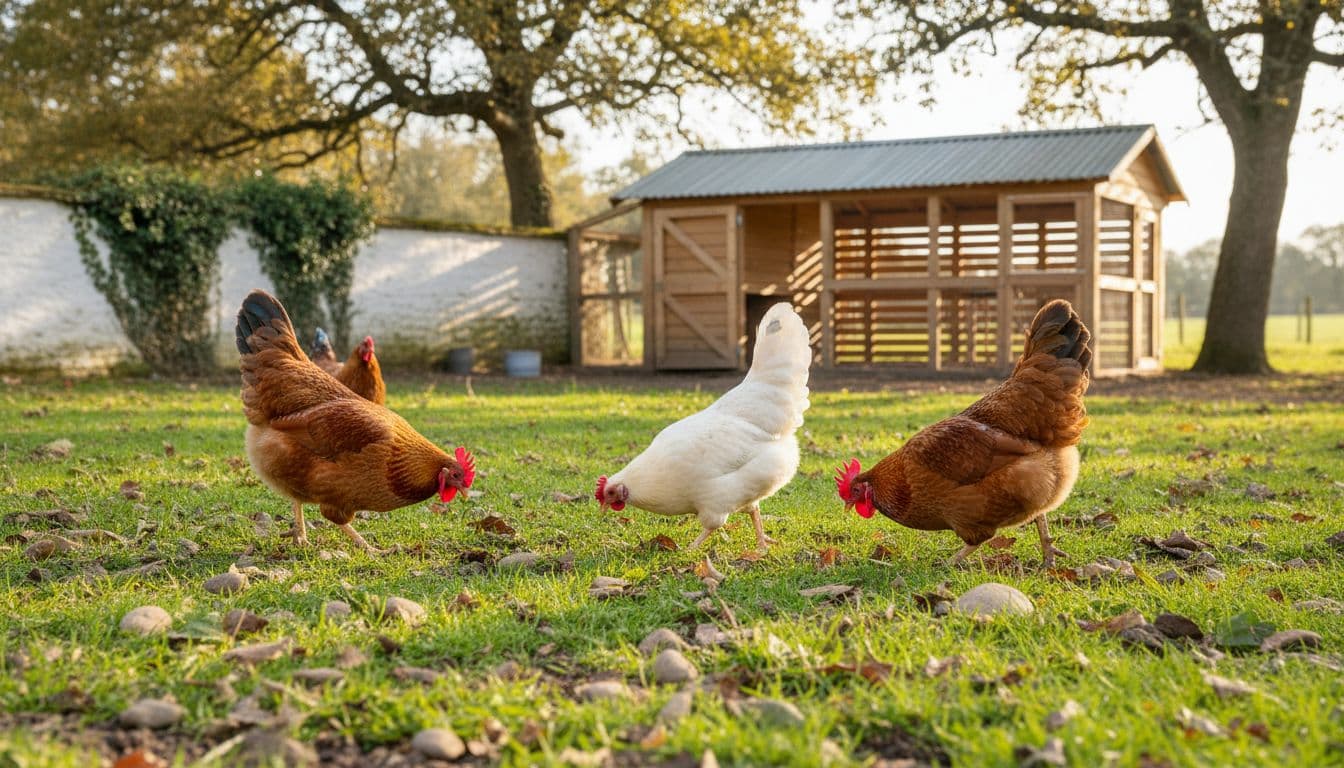
Insects bring protein, fats, and useful amino acids into the ration. Those nutrients help birds build body tissue, keep up energy, and recover after stress. In practice, that can improve the feed conversion ratio in broilers and support steadier production in layers.
For laying hens, consistent nutrition matters a lot. When the feed supplies enough usable protein, birds are more likely to keep up egg production without sharp dips. During molting or recovery periods, that added nutrition can also help birds return to condition more smoothly.
The goal is steady performance, not miracle results. A well-balanced insect-based ration can support flock health when it replaces part of a costly protein mix and still leaves room for grains, minerals, and vitamins.
A recent study in poultry feed found that replacing part of soybean meal with insect larvae improved growth and meat quality in broilers. Research on insect larvae in broiler diets adds weight to what many farmers want to see in the field, better birds without wasting feed.
Better feed use often shows up in the pen before it shows up in the ledger.
A feed choice that can improve farm profits
Lower input costs and stronger bird performance work together. That combination can improve net income because the farmer spends less on feed while getting more value from each bird or egg sold.
This is where insect protein becomes part of a smarter farm business model. It can help poultry keepers protect margins when commercial feed prices climb, and it can also support more stable planning across the production cycle.
There are broader benefits too. In Kenya, insect-based feed could help free up maize and fish that would otherwise go into feed, support jobs in local production, and create more value inside the country. For poultry farmers, those bigger gains still start with a simple farm-level result: lower costs, better birds, and a cleaner path to profit.
In short, insect protein for poultry Kenya is attractive because it solves more than one problem at once. It helps farms manage feed bills, supports healthy growth, and gives poultry businesses a better chance to stay profitable over time.
Mealworms and black soldier fly larvae, what poultry farmers should know
Mealworms and black soldier fly larvae both fit well into poultry feeding plans, but they function differently in practice. For Kenyan farmers looking at insect protein for poultry, the main question is not which insect is superior in general. Instead, it is which option best aligns with the specific needs of the birds, the farm budget, and the local feeding system.
Mealworms are typically used as a protein-rich supplement and a high-value treat. Conversely, black soldier fly larvae are often preferred when farmers want a reliable, steady supply at scale. Both contribute to chicken health, but neither should replace a complete ration on its own.
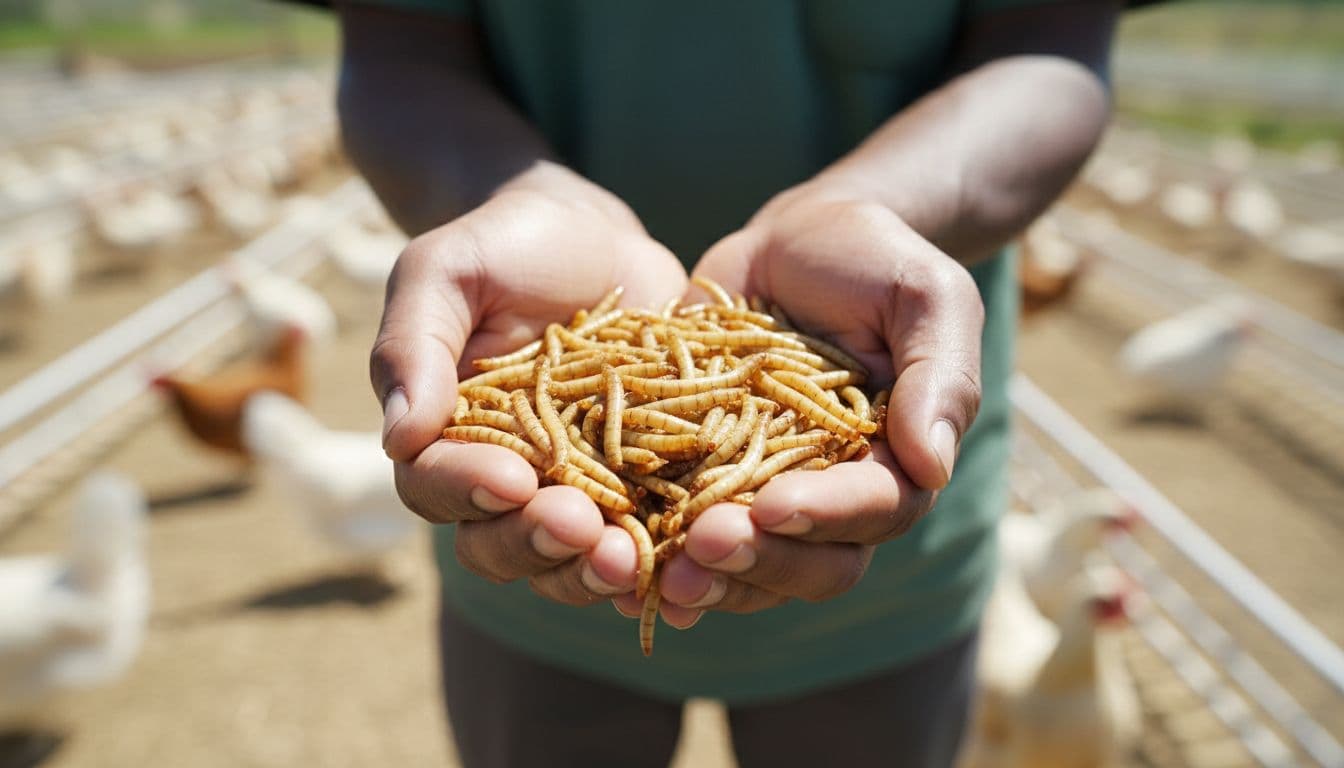
### Why mealworms are popular for chickens
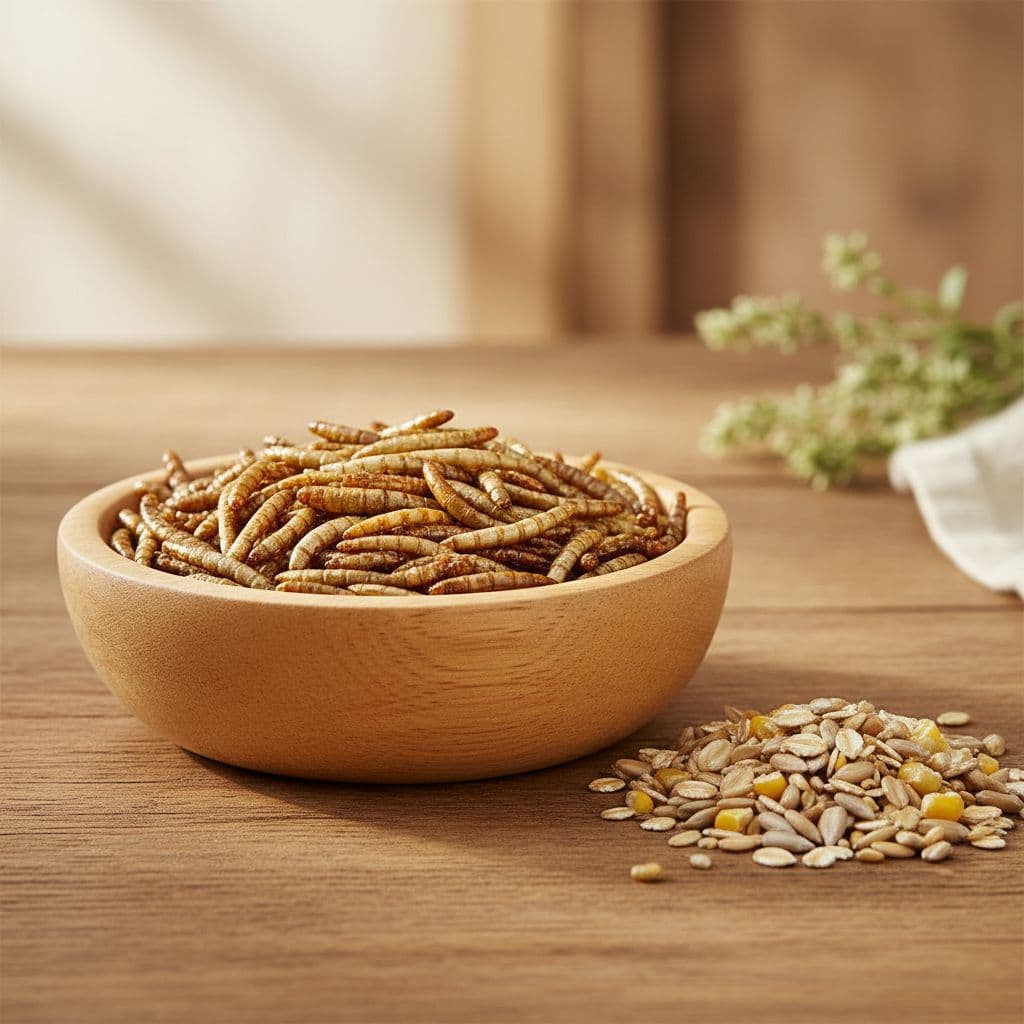
Mealworms are popular because chickens find them highly palatable, and farmers see an immediate, enthusiastic response. Because birds peck at them eagerly, they serve as an excellent treat, reward, or training tool. This makes them particularly useful for small flocks, backyard pens, and mixed-purpose farms.
They also provide dense nutrition. Mealworms are rich in protein and fat, adding concentrated energy to the diet during growth, stress, or cooler weather. The nutritive profiling of these insects shows they support overall performance when used correctly as part of a larger, balanced ration.
For many farmers, the appeal is convenience. Mealworms are easy to manage in smaller setups, and they serve as an effective enrichment feed. Searching for mealworms keeps chickens active and occupied, which is essential for reducing boredom in confined pens. However, mealworms should be provided in moderation. Their high fat content can disrupt the nutritional balance of the diet if overfed, so they are best categorized as a dietary supplement.
Why black soldier fly larvae are often used at scale
Black soldier fly larvae are a favorite for farmers seeking volume and efficiency. They thrive on organic waste, such as food scraps and agricultural byproducts, converting this material into a valuable feed ingredient. This efficiency is why the mass rearing insects approach is increasingly popular; it allows farmers to reduce waste while producing high-quality protein.
The circular nature of this process is a major advantage. By using black soldier fly larvae to recycle organic matter, farms lower their waste disposal pressure while simultaneously generating feed. Because these insects possess a favorable amino acid composition, they provide an excellent foundation for poultry nutrition.
Beyond general growth, these larvae are highly valued for their mineral content. They contain more calcium than mealworms, making them a superior choice for laying hens. When processed into a shelf-stable black soldier fly meal, they become a consistent, reliable ingredient that can be mixed into standard rations. For a practical comparison of these species, research on black soldier fly larvae in poultry feed highlights why they are often viewed as the more sustainable, scalable option for professional operations.
For layers, calcium matters just as much as protein. That is one reason why black soldier fly larvae often make more sense than mealworms alone.
Because these systems can be scaled up, they work better for farms requiring a consistent daily supply. While small flocks may thrive with occasional mealworms, larger operations benefit from a product that can be produced in high volumes and incorporated into feed consistently.
Why insect feed is still not a complete diet
Insect feed adds significant value, but it does not cover every requirement for a healthy flock. Birds still need a balanced ration including calcium, energy, vitamins, minerals, and clean water. If you feed only insects, the diet will fall short in critical areas, especially for productive layers.
Layers require consistent calcium for strong eggshells and a precise energy balance to maintain production without physical strain. While insects contribute protein and calories, they cannot replace a properly formulated layer feed or a high-quality grower ration. This is especially true when the flock is in peak production.
A practical feeding plan looks like this:
- Mealworms work well as a treat, a reward, or a small daily supplement.
- Black soldier fly larvae fit better as a larger-scale feed ingredient or protein base.
- Complete chicken feed remains the primary source of essential nutrients.
- Mineral support is vital, particularly for hens in the laying phase.
For poultry farmers, the smartest approach is balance. Use mealworms when you want an easy, attractive feed boost. Use black soldier fly options when you want to build a sustainable, scalable recycling system. By keeping the main ration complete, you ensure the birds get everything they need to grow, lay, and stay healthy. That is the real strength of insect protein for poultry in Kenya; it gives farmers useful, cost-effective options without forcing them to compromise on sound feeding practices.
How insect farming supports Kenyan communities and the local economy
Insect farming does more than lower feed costs. It keeps value inside local markets, opens doors for small businesses, and gives rural households another way to earn income. For poultry farmers, that matters because a cheaper feed ingredient can also become a local source of jobs and cash flow.
The wider effect is easy to miss at first. When insects are raised, processed, and sold near the farm, the money does not leave the community as fast. Instead, it moves through workers, suppliers, transporters, and feed buyers.
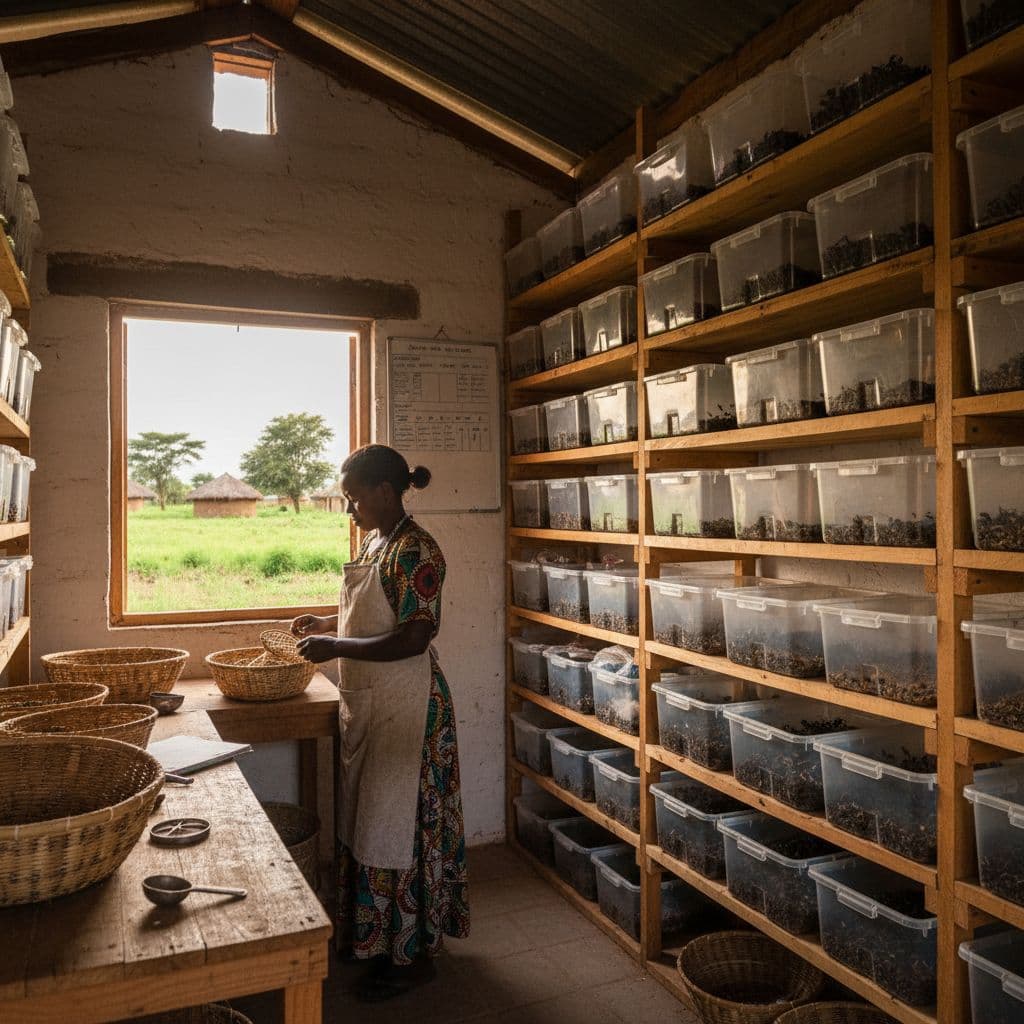
### More local jobs and new income streams
Insect farming creates work at several points in the chain. People can breed insects, collect larvae, dry them, package them, sell feed, and move products to market. That means one small operation can support more than one income stream.
This is especially useful for young entrepreneurs and smallholder farmers. Small-scale farming operations often begin with a basic breeding unit, then expand into dried insect protein, starter kits, or organic fertilizer. Over time, those side businesses can become steady sources of rural income and drive significant agribusiness growth.
Regional trends across Kenya and Uganda show that this sector is expanding rapidly. Local entrepreneurs are producing thousands of tons of dried insect protein for feed markets, which proves that insect farming is moving beyond a pilot idea. It is becoming a real business line that supports poultry, fish, and other livestock sectors.
Broader research also points to the economic upside. One assessment found that wider use of insect-based feed in Kenya could create thousands of jobs each year and improve household earnings. A PLOS One study on insect-based feeds in Kenya also links insect feed adoption with stronger poultry production and better livelihoods in local counties.
Better use of waste in circular farming systems
Insect farming fits well into circular farming because insect rearing often utilizes various organic waste materials or food scraps. Instead of letting that material rot or pile up, farmers can turn it into larvae, protein, and valuable organic fertilizer.
That creates two wins at once. First, it reduces the waste burden on the farm. Second, it produces something useful that can go right back into production.
This matters in practical terms:
- Food waste becomes feed: kitchen scraps and crop residues can support insect growth.
- Insect residue becomes fertilizer: the leftover material (frass) can return essential nutrients to the soil.
- Less waste leaves the farm: that lowers disposal problems and keeps value on site.
The result is a tighter farm loop. Instead of buying everything from outside, farmers can recycle part of what they already have. That makes insect protein for poultry Kenya more than a feed idea, it becomes part of a smarter farm system.
Why this matters for food security in Kenya
At the food system level, insect feed can free up maize and fish for people, not only for animals. That is important in a country where feed demand competes with human food demand. When insects replace part of the protein in chicken feed, more grain and fish stay available for the table.
The scale of that shift can be large. Research shared by icipe suggests that using a modest share of insect-based feed in Kenya could help feed hundreds of thousands to several million people with maize and fish that would otherwise go into feed. The same body of work also points to thousands of jobs and meaningful gains for the national economy, along with a real chance to reduce poverty for many households.
When feed becomes more efficient, the whole food chain gets more room to breathe.
For poultry keepers, that broader picture still connects back to the farm gate. Lower feed pressure can mean more stable bird production, while local insect supply can keep money moving through Kenyan communities. For the country, it means a feed solution that supports income, cuts waste, and helps stretch scarce food resources a little further.
What farmers should watch before switching to insect protein
Insect protein can help lower feed pressure, but only if farmers use it with care. The biggest mistakes come from rushing the switch, buying poor-quality products, or treating insect meal like a complete diet on its own. Using this sustainable ingredient as part of a strategy for affordable poultry feed requires attention to detail.
A smart start means checking the source, the processing, and the fit for your birds. It also means watching costs and flock response closely, because a feed that looks cheaper can become expensive if it causes waste or poor performance.
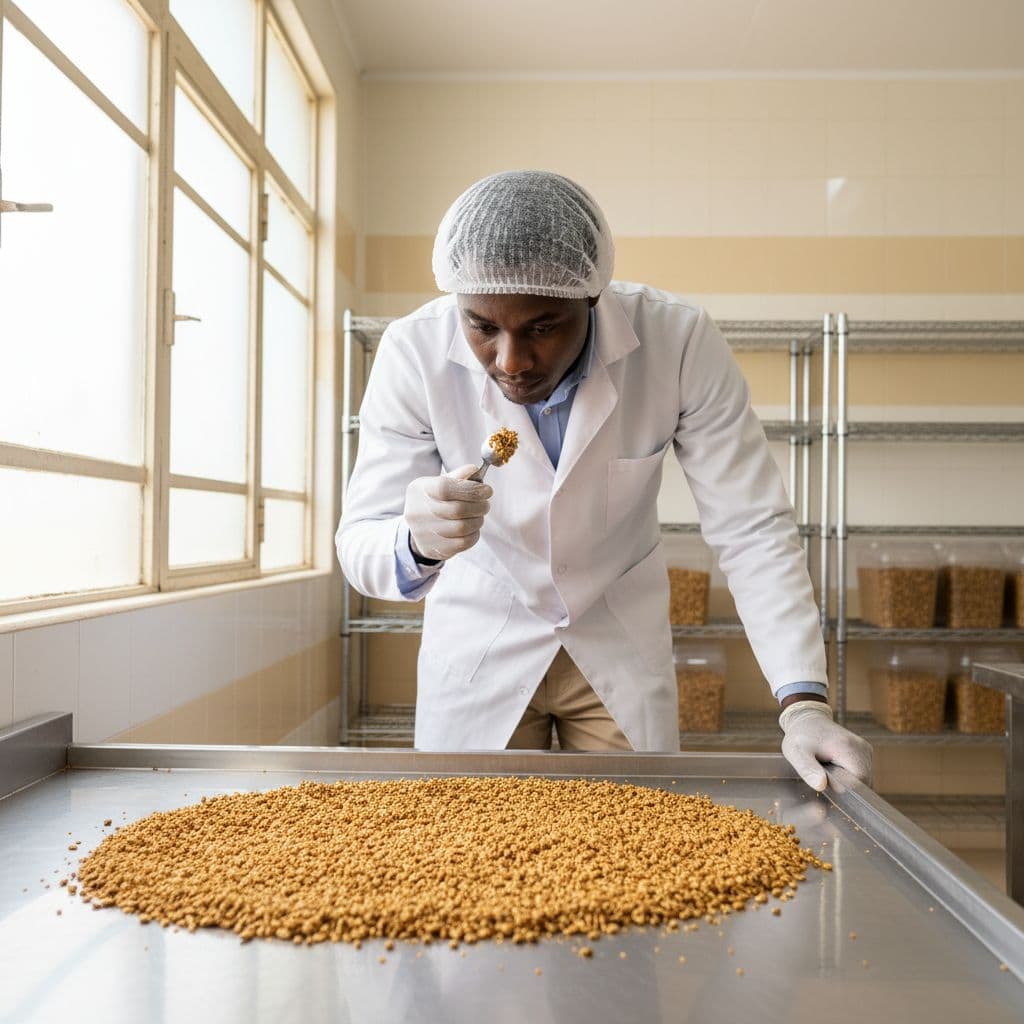
Farmers can source insect-based feed by connecting with private sector partners, local insect-rearing startups, and agricultural technology hubs based in counties like Nairobi, Kiambu, and Nakuru. Many producers operate online or through local agricultural extension services, providing dried larvae, insect meal, or live cultures to poultry farmers. It is essential to verify that your supplier follows hygienic rearing practices and provides a consistent, quality-tested product before placing a bulk order.
Check quality, safety, and consistency
Clean handling matters as much as protein content. Insect feed should come from a trusted source, be well dried, and stay free from mold, dirt, and bad odors. If the product looks damp, clumpy, or dusty, walk away.
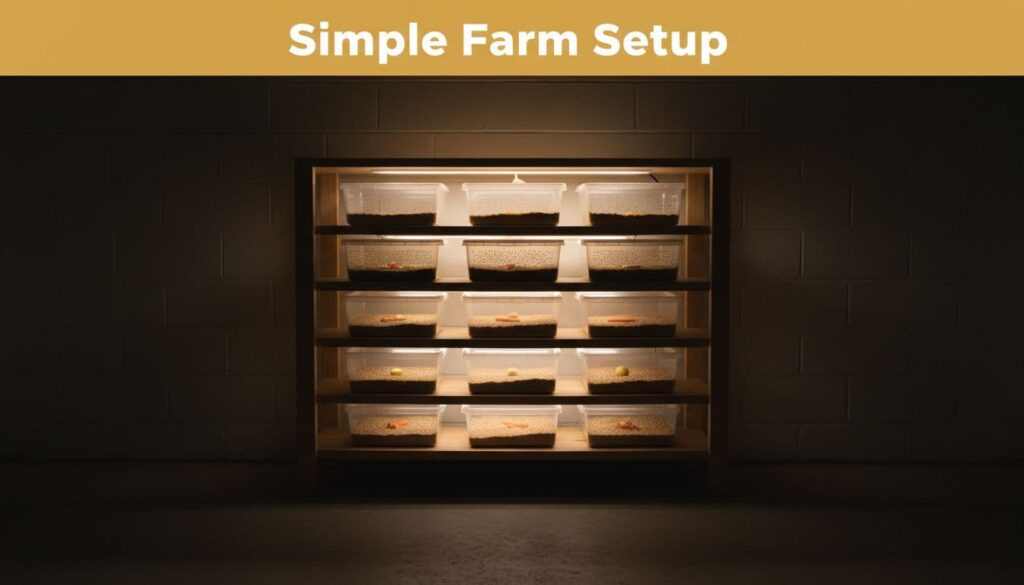
The same rule applies if you manage your own insect rearing on the farm. Use clean trays, clean water, and safe feed material for the insects themselves. Contamination often starts in the rearing substrate, then moves into the final feed.
Good insect protein should look, smell, and store like a proper feed ingredient, not like waste.
Storage also matters. Keep it dry, covered, and away from heat, rats, and insects. If you let moisture creep in, the feed can spoil fast and lose value. For safety, farmers should also avoid insect products made from unknown waste streams or dirty organic matter.
A few simple checks help reduce risk:
- Dryness: The feed should feel dry and stable, not soft or sticky.
- Clean source: Buy from producers who explain what the insects were raised on.
- Fresh stock: Use feed before it gets old or starts to smell off.
- Separate storage: Keep insect meal away from wet sacks, manure, and chemicals.
Food safety research on insect feed warns that poor substrates and weak hygiene can create microbiological and chemical risks. That is why sourcing and handling are just as important as the ingredient itself. Food safety issues in insect feeds explains why clean production systems matter.
In Kenya, the growth of insect-based animal feed production is increasingly guided by quality control measures and standards set by the Kenya Bureau of Standards (KEBS). While the industry is still evolving, reputable producers often seek certification to ensure their insect meal is free from contaminants and safe for livestock consumption. Farmers should always source feed from providers who prioritize hygiene and have verified testing results for their products.
Start small and track results
A full switch can hide problems. A small trial gives you a clearer picture of how your birds respond before you buy more. Mix insect protein into the ration gradually, then watch the flock for one to two weeks before raising the amount.
Track what changes in the pen. Are the birds eating well? Are they growing at the expected pace? Are layers keeping egg output steady? Are droppings normal, or do they look loose and messy?
It helps to keep a simple record of:
- Feed use, so you know how much birds consume.
- Body growth or weight gain, especially in broilers.
- Egg numbers, for layers and dual-purpose birds.
- Bird health, including stress, weakness, or unusual droppings.
- Cost per bird, so you can compare the new feed against the old one.
This kind of record tells the real story. Insect protein may lower cost, but only if birds use it well and stay healthy. If performance slips, reduce the amount and check the source, the storage, and the full ration balance.
Clean water matters during the switch too. Birds need steady access to fresh water when feed changes, because dry feed and changing protein levels can affect intake. A small trial protects your flock and your wallet at the same time.
Match insect feed to the type of birds you keep
Different birds need different feed plans. Broilers need fast growth and strong protein support. Layers need protein too, but they also need enough calcium and energy for egg production. Chicks are more delicate and need a careful ration that supports early development without upsetting digestion.
For broilers, insect protein can work well as part of a starter or grower mix. For layers, it should support the ration without replacing the minerals that protect eggshell quality. Chicks need even more caution, because sudden diet changes can stress young birds.
Backyard birds often do well with smaller amounts, especially when the feed is mixed with grains or a complete ration. Bird owners and reptile keepers may also use mealworms, but poultry should remain the main focus here, because chickens need a balanced daily diet, not just a treat.
A simple guide helps:
| Bird type | What to watch | Feeding approach |
|---|---|---|
| Broilers | Growth rate, feed conversion, body condition | Start with a small inclusion and compare results |
| Layers | Egg count, shell quality, body weight | Use as part of a balanced layer ration |
| Chicks | Appetite, droppings, early growth | Keep changes small and gradual |
| Backyard birds | Health, activity, overall condition | Use insect protein as a supplement, not the main feed |
The main point is balance. Using insect protein for poultry in Kenya works best when it fits the bird, the stage of growth, and the rest of the ration. If you match the feed to the flock, you get a better chance of saving money without weakening performance.
Frequently Asked Questions
Frequently Asked Questions
Can I replace 100% of my commercial feed with insects? No, you should not replace your entire ration with insects. While insects provide excellent protein and fat, they lack the specific balance of vitamins, minerals, and energy required for optimal health and eggshell formation.
Which insects are best for my poultry? It depends on your goals and the scale of your operation. Mealworms are highly palatable and great for smaller backyard flocks as a reward, while black soldier fly larvae are better for large-scale operations due to their consistent nutrient profile and ease of mass production.
Is insect farming difficult for a smallholder farmer? It is quite manageable, but it requires strict attention to hygiene and sourcing. You must ensure the insects are raised on clean organic waste to avoid contamination and that the final product is properly dried to prevent spoilage.
How do I introduce insect protein to my flock safely? Start by replacing a small percentage of your current feed with the insect protein and monitor your birds for one to two weeks. Observe their growth, egg output, and overall health to ensure the change is positively affecting their performance before scaling up.
Can I replace 100% of my commercial feed with insects?
No, you should not replace your entire ration with insects. While insects provide excellent protein and fat, they lack the specific balance of vitamins, minerals, and energy required for optimal health and eggshell formation.
Which insects are best for my poultry?
It depends on your goals and the scale of your operation. Mealworms are highly palatable and great for smaller backyard flocks as a reward, while black soldier fly larvae are better for large-scale operations due to their consistent nutrient profile and ease of mass production.
Is insect farming difficult for a smallholder farmer?
It is quite manageable, but it requires strict attention to hygiene and sourcing. You must ensure the insects are raised on clean organic waste to avoid contamination and that the final product is properly dried to prevent spoilage.
How do I introduce insect protein to my flock safely?
Start by replacing a small percentage of your current feed with the insect protein and monitor your birds for one to two weeks. Observe their growth, egg output, and overall health to ensure the change is positively affecting their performance before scaling up.
Conclusion
Insect protein offers Kenyan poultry farmers a practical way to cut feed costs without sacrificing bird health or productivity. When integrated into a balanced ration, these sustainable feed solutions support steady growth, consistent egg production, and improved farm margins.
The strongest takeaway is that insect protein for poultry Kenya works best as part of a comprehensive feeding plan. Farmers who start small, monitor results closely, and maintain a balanced diet are positioned to see the greatest gains. Given the significant market potential, these proteins are increasingly becoming a staple in both poultry and fish feeds across the country.
For poultry keepers who want to lower expenses, build stronger flocks, and adopt a more environmentally friendly approach, mealworms and black soldier fly larvae are worth serious attention. When used effectively, these resources help make poultry farming in Kenya more affordable, sustainable, and profitable for the long term.